SolidParking CTT: 7 Powerful, Essential Car Turntable Features

2021-10-28
SolidParking CTT car turntable for driveway and garage use

SolidParking CTT: A 360° Car Turntable for Driveways and Garages

A narrow driveway can turn a simple trip into a reversing routine.

A private garage may have enough room for a car, but not enough space to turn it around. In a showroom, a vehicle may need to face a different direction without being driven out of the display area.

SolidParking CTT is designed for this type of movement problem. It rotates a vehicle on a platform through 360°, helping simplify vehicle positioning in driveways, garages, and commercial display spaces.

But how does it work, and what should a buyer consider before choosing one?

Let’s take a closer look.

1. What Is SolidParking CTT?

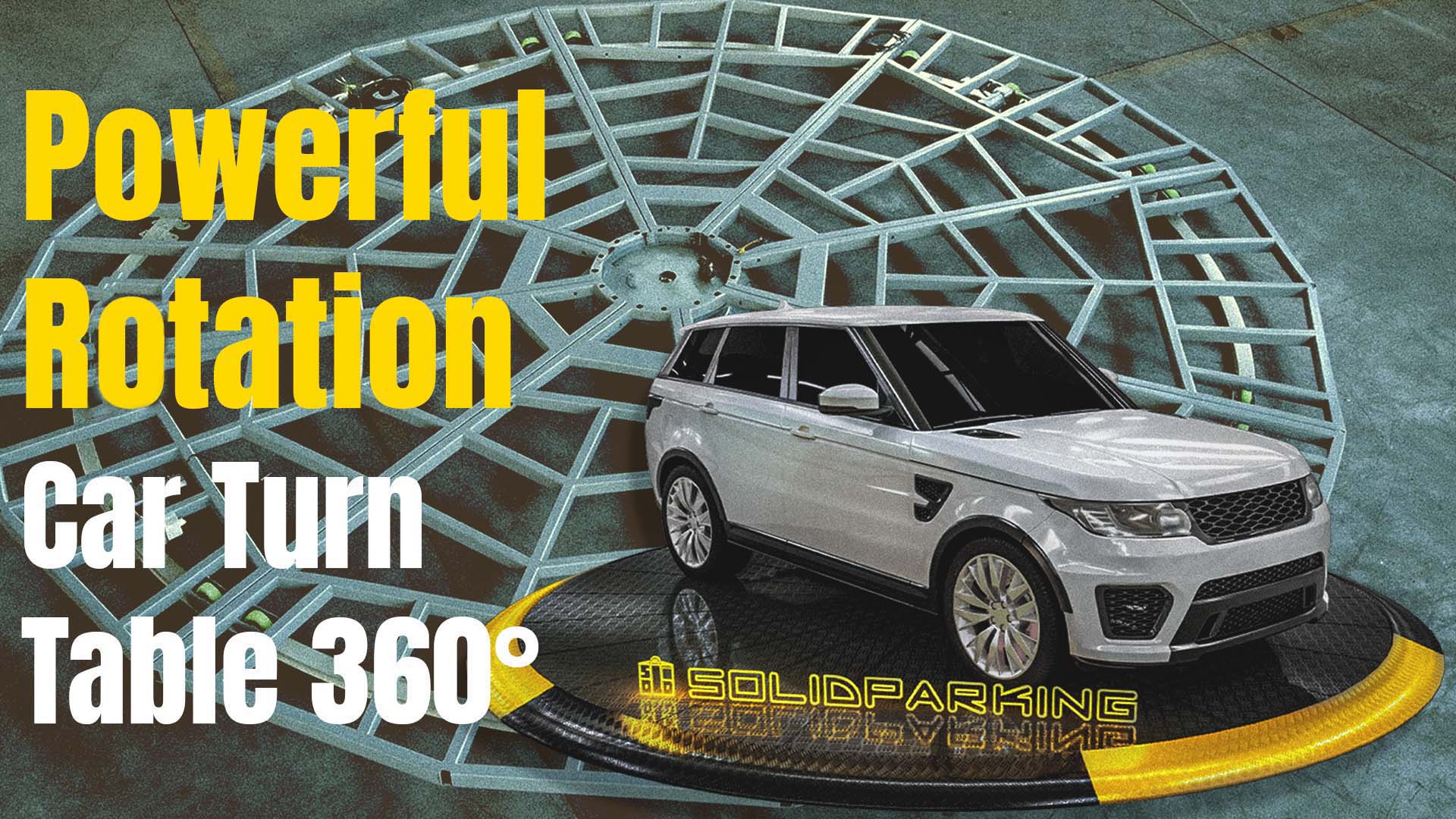
SolidParking CTT is a motorized car turntable that rotates a vehicle around a central axis.

The vehicle drives onto the platform and stops in the designated position. The rotating mechanism then turns the platform to the required direction.

Instead of requiring the driver to make a complicated turning maneuver, the platform changes the vehicle’s orientation.

This makes the CTT relevant to applications where the available turning space is limited.

It is important to understand what this equipment does—and what it does not do.

A car turntable is primarily designed for vehicle rotation. It does not create additional parking levels or transport vehicles between floors.

2. 7 Key Features of the CTT Car Turntable

1. 360-Degree Vehicle Rotation

The main function of SolidParking CTT is straightforward: rotate a vehicle through 360 degrees.

This allows a driver to position the vehicle toward the desired exit direction without relying entirely on the available turning radius.

It can be useful for narrow driveways, compact garages, and vehicle display areas.

2. Above-Ground and In-Ground Configurations

Different sites have different installation conditions.

SolidParking offers above-ground and in-ground CTT configurations.

An above-ground installation may suit a project where excavation needs to be minimized.

An in-ground configuration can provide a more integrated appearance, with the rotating platform positioned within a prepared floor recess.

The right choice depends on the existing floor, site construction, available depth, and desired finished-floor arrangement.

3. Low-Profile Equipment Design

The available floor height can be an important consideration in a garage.

A low-profile design helps address projects where the installation height needs to be considered alongside vehicle access.

However, the final equipment height and surrounding floor transition must be confirmed against the selected configuration.

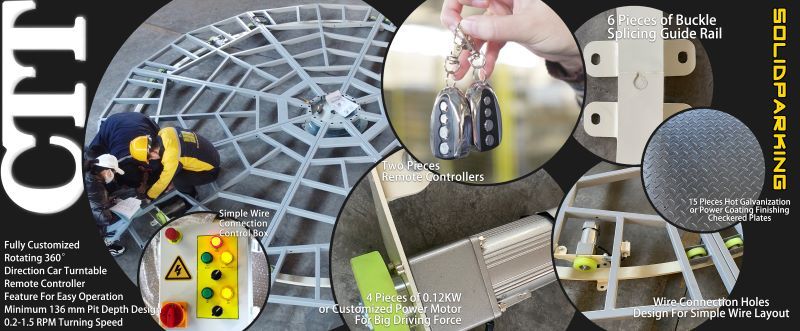
4. Servo Motor and Relay Control

The SolidParking product listing identifies servo motors and relay control as part of the CTT feature set.

The motor and control arrangement should be confirmed for the specific project before ordering.

Buyers should also ask how the operating controls, stopping functions, and access around the rotating area are configured.

5. Customizable Platform Material and Rotation Speed

Not every project has the same requirements.

The platform material and rotation speed can be customized according to the application.

For example, a residential driveway and a commercial vehicle display area may have different operating frequencies and surface requirements.

These details should be discussed during the equipment specification stage.

6. Powder-Coated Surface Finish

The CTT product listing includes powder coating as a surface-finishing option.

The selected finish should be evaluated according to the installation environment, expected use, and maintenance requirements.

For projects exposed to moisture or outdoor conditions, ask the supplier to confirm the applicable corrosion-protection specification.

7. Low-Noise Operation

The product listing also identifies low-noise operation as a CTT characteristic.

This can be relevant in residential garages and properties where the operating environment matters.

Actual noise levels depend on the selected configuration and installation conditions. Buyers should request product-specific information if noise is a critical project requirement.

3. Where Can a CTT Car Turntable Be Used?

The application is not limited to one type of property.

Residential Driveways

Some driveways allow vehicles to enter but leave little room for turning around.

A CTT car turntable can rotate the vehicle toward the exit, reducing the need for repeated reversing and steering adjustments.

Private Garages

A garage can accommodate a vehicle while still providing insufficient maneuvering space.

A rotating platform can help reposition the vehicle within the available layout.

The vehicle dimensions, platform diameter, garage entrance, walls, and columns all need to be considered.

Commercial Showrooms

In an automotive showroom, vehicle presentation matters.

A rotating platform allows a vehicle to be displayed from different angles without repeatedly driving it out of position.

This can be useful for display areas, exhibitions, and dealership environments.

Commercial Parking Areas

Certain commercial properties have restricted access or complicated vehicle movement paths.

A turntable may provide a practical way to change vehicle direction, provided the vehicle dimensions, operating frequency, and site conditions are suitable.

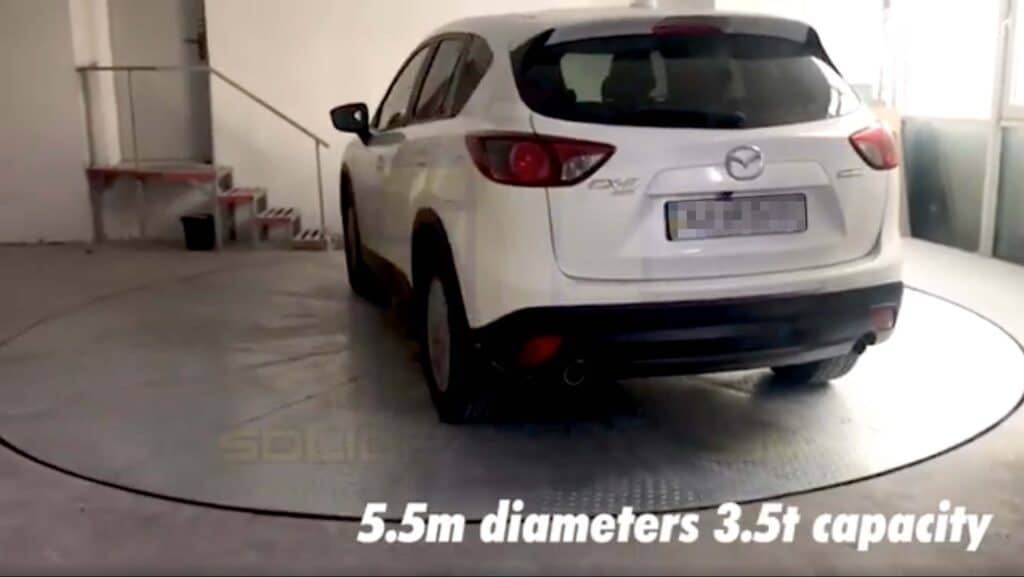
360 degree car turntable rotating a vehicle in a driveway

4. SolidParking CTT Reference Specifications

The published SolidParking product category provides the following reference information.

SpecificationPublished Reference
Rotation angle360°
Reference lifting capacity3,500 kg
Higher customized capacityUp to 10,000 kg, subject to engineering confirmation
Platform widthCustomizable; product listing references 5,000 mm
Rotation speedProduct listing displays 2 circles/min
InstallationAbove-ground / In-ground
Drive and controlServo motor and relay control listed
Platform materialCustomizable
Surface finishPowder coating

These figures should be treated as product-category references, not a guarantee that all specifications are available together in one standard configuration.

The final load capacity, platform dimensions, rotation speed, and structural design must be confirmed for the selected CTT configuration.

5. What Should You Check Before Installing a Car Turntable?

Choosing a rotating platform is not simply a matter of selecting its diameter.

The available space and the vehicle itself determine whether the proposed configuration is suitable.

Before requesting a quotation, prepare the following information.

Vehicle dimensions and weight

Provide the vehicle’s length, width, height, and actual weight.

Available site dimensions

Measure the installation area, including nearby walls, columns, garage doors, and the vehicle’s approach and exit paths.

Installation arrangement

Determine whether an above-ground or in-ground configuration is being considered.

For an in-ground installation, the pit design, structural conditions, drainage, and maintenance access should be reviewed.

Required operating conditions

Explain how frequently the platform will operate and whether it is intended for residential, showroom, or commercial use.

Safety and control requirements

Ask the manufacturer to confirm the operating controls, emergency stopping arrangements, access protection, and measures addressing unintended movement.

For general machinery safety background, see ISO 12100: Safety of Machinery – Risk Assessment and Risk Reduction.

For applicable U.S. workplace installations, also review OSHA 29 CFR 1910.212 – General Requirements for All Machines.

These are general reference resources, not evidence that a particular CTT configuration is certified or compliant in every country. Project-specific requirements must be verified for the installation location.

In-ground car turntable installation for a private garage

6. Car Turntable vs. Vehicle Transport Platform

A car turntable and a vehicle transport platform may look similar because both use vehicle-supporting platforms.

However, they solve different problems.

EquipmentMain FunctionTypical Application
CTT Car TurntableRotates a vehicle horizontallyDriveways, garages, showrooms
F-VTSTransports vehicles vertically using a four-post platformFloor-to-floor vehicle transport
S-VTSTransports vehicles vertically using a scissor mechanismBasements, garages, commercial buildings

If the main challenge is limited turning space, a CTT car turntable is the relevant product to evaluate.

If the project requires moving vehicles between floors, a vertical vehicle transport platform may be more appropriate.

Explore the SolidParking Special Car Elevator Platforms to compare CTT, F-VTS, and S-VTS.

For a broader explanation of garage space planning, read our Car Turntable for Garage Planning Guide.

7. Request a Customized CTT Solution

Every driveway, garage, and commercial display area has different requirements.

Before recommending a configuration, SolidParking needs to understand the vehicle and the available installation space.

To start a project review, prepare:

  • Vehicle type, dimensions, and weight

  • Available installation area

  • Above-ground or in-ground preference

  • Required platform dimensions

  • Intended application

  • Project location

  • Site layout or installation photographs, if available

Need a car turntable for your project?

Contact the SolidParking team to discuss your CTT requirements and request a customized layout review.

The right configuration starts with the actual site conditions—not just a product model number.

qrcode