
Car Elevator: 7 Essential Factors for Choosing the Right Hydraulic Garage Lift
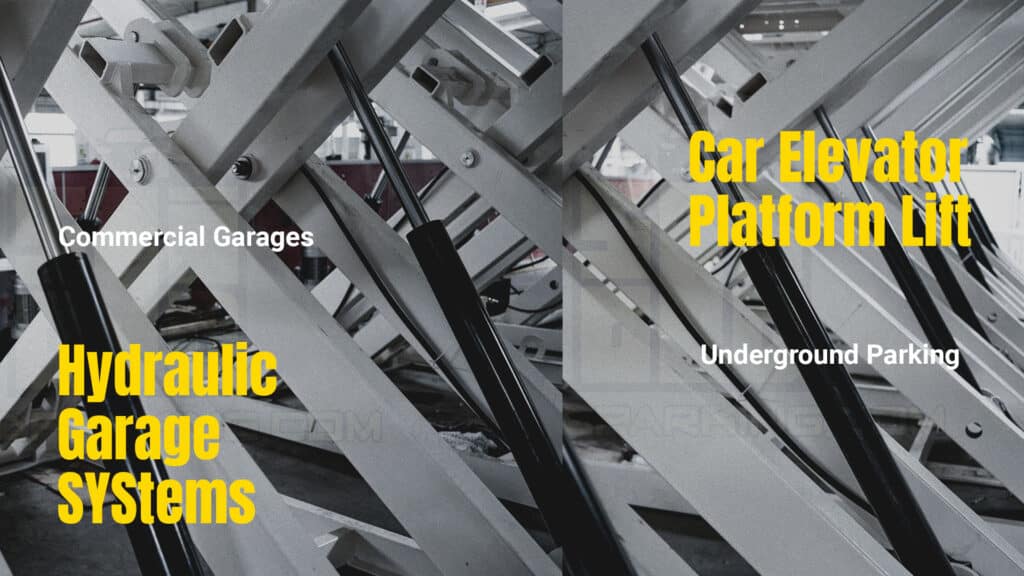
A car elevator is an effective solution for moving vehicles between different floors without relying entirely on conventional vehicle ramps. It is commonly used in commercial parking garages, underground parking facilities, automotive showrooms, dealerships, and industrial buildings where vertical vehicle transportation is required.
However, choosing the right car elevator involves more than comparing lifting capacity or platform dimensions. The lifting structure, building layout, vehicle specifications, installation conditions, and operating requirements all influence the final equipment selection.
This buyer’s guide explains seven essential factors to consider when choosing a hydraulic car elevator, including the differences between scissor-type and four-post lifting systems. Whether you are a property developer, architect, contractor, or parking equipment buyer, understanding these factors will help you identify a suitable vehicle transportation solution.
1. What Is a Car Elevator?
A car elevator is a mechanical lifting system designed to transport vehicles vertically between different building levels.
Unlike conventional vehicle ramps, which require a sloped driving route, a hydraulic car elevator uses a lifting platform to move vehicles between designated floors.
The vehicle drives onto the platform, which is then raised or lowered by a mechanical and hydraulic system.
Car elevators are commonly used in:
Underground parking garages
Commercial buildings
Automotive dealerships and showrooms
Residential buildings with limited parking space
Vehicle storage facilities
Industrial buildings and vehicle transportation areas
For projects with limited ramp space, a properly designed car elevator can provide a practical alternative for vertical vehicle access.
However, a car elevator does not automatically solve every parking or circulation problem. The building must still provide suitable vehicle entry, exit, turning space, and traffic management.
2. Types of Hydraulic Car Elevators
Not all car elevators use the same lifting mechanism. The structural design affects installation requirements, platform configuration, and project suitability.
Two commonly evaluated hydraulic solutions are scissor-type and four-post vehicle elevators.
2.1 Hydraulic Scissor Car Elevator (S-VTS)
The S-VTS is a hydraulic scissor-type vehicle elevator developed for vertical vehicle transportation.
It uses hydraulic cylinders to operate a scissor lifting mechanism, raising and lowering the vehicle platform.
Depending on project requirements, the S-VTS can be customized with different platform dimensions, lifting heights, and load capacities.
Typical applications include:
Underground parking garages
Commercial vehicle showrooms
Basement vehicle access
Multi-level vehicle transportation
Customized building projects
Its scissor lifting arrangement provides a different structural solution from conventional four-post platforms.
SolidParking offers project-specific S-VTS configurations, including single and multiple-platform arrangements.
Four Post Lifting Platform: 7 Powerful Ways to Move Vehicles Floor-to-Floor
2.2 Hydraulic Four-Post Car Elevator (F-VTS)
The F-VTS uses four supporting columns to guide and support the lifting platform.
Vehicles drive directly onto the platform, which moves vertically through a hydraulic lifting system.
The four-post structure is suitable for projects requiring a straightforward supporting arrangement and customized platform dimensions.
Typical applications include:
Commercial garages
Automotive dealerships
Industrial facilities
Vehicle transportation buildings
Heavy vehicle and cargo handling applications
Published SolidParking configurations include a 5,000 kg reference lifting capacity, with other configurations subject to engineering review.
The correct choice between these hydraulic car elevator types depends on the project layout, vehicle requirements, and structural conditions.
3. Seven Essential Factors to Consider Before Buying a Car Elevator
Before selecting equipment, commercial buyers should evaluate seven important factors.
Factor 1: Vehicle Weight and Lifting Capacity
The first consideration is the maximum weight the platform needs to transport.
Identify the heaviest vehicle or load expected during normal operation.
Do not rely only on vehicle model names or average vehicle weights. Consider the actual gross vehicle weight, including accessories and additional equipment.
For projects involving SUVs, pickup trucks, luxury vehicles, or commercial vehicles, the rated lifting capacity must provide an appropriate engineering allowance.
The S-VTS and F-VTS offer different capacity configurations. The final rated capacity should be confirmed through the manufacturer’s technical proposal.
Factor 2: Vehicle Dimensions and Platform Size
A suitable car elevator must accommodate the actual vehicles using the system.
Before selecting a platform, confirm:
Maximum vehicle length
Maximum vehicle width
Maximum vehicle height
Wheelbase
Ground clearance
Vehicle entry and exit clearance
The usable platform dimensions are not the same as the overall equipment dimensions.
A platform may satisfy the weight requirement but still be unsuitable if the vehicle cannot enter or fit with adequate clearance.
For commercial garages and dealerships, it is important to consider the largest vehicle expected rather than designing only for standard passenger cars.
Factor 3: Required Lifting Height
The lifting height determines how far the vehicle platform must travel vertically.
Measure the floor-to-floor distance between the designated levels.
For example, a project transferring vehicles from ground level to Basement 1 may require approximately 3,200 mm of vertical travel, depending on the building design.
The required lifting travel must be distinguished from the total building height.
It is also important to consider the platform’s final position, entrance elevation, overhead clearance, and vehicle exit arrangements.
Factor 4: Available Installation Space and Pit Requirements
The available installation space can strongly influence the choice of hydraulic garage lift.
Evaluate:
Overall equipment footprint
Usable platform dimensions
Pit dimensions and depth
Overhead clearance
Supporting column positions
Maintenance access
Vehicle entry and exit space
Some configurations require a pit, while others can be designed with different installation arrangements.
The S-VTS and F-VTS should both be evaluated against the actual building dimensions before equipment selection.
For existing buildings, a site assessment is particularly important because structural columns, foundations, and access openings may already be fixed.
Factor 5: Building Structure and Foundation
A car elevator transfers loads into the building structure.
The foundation and supporting floor must be capable of accommodating the equipment’s operating loads.
Four Post Lifting Platform: 7 Powerful Ways to Move Vehicles Floor-to-Floor
The project team should review:
Concrete strength
Foundation dimensions
Reinforcement conditions
Anchoring requirements
Structural load distribution
Pit construction and waterproofing
The responsible structural engineer should confirm that the building can support the proposed installation.
Do not assume that an existing garage floor can support a vehicle lifting platform without a structural assessment.
Factor 6: Safety Systems and Operating Requirements
Safety is essential for any hydraulic car elevator.
Before purchasing equipment, ask the manufacturer about the safety features included in the proposed configuration.
Depending on the equipment design, these may include:
Mechanical safety locks
Hydraulic protection devices
Upper and lower travel limit switches
Emergency stop
Key-operated controls
Overload protection
Electrical safety controls
The final safety configuration should match the equipment design, operating method, and applicable local regulations.
For commercial installations, also consider access control, operator training, inspection arrangements, and maintenance procedures.
Factor 7: Customization, Installation and After-Sales Support
A commercial car elevator is often a project-specific solution rather than a standard off-the-shelf product.
The manufacturer should understand the relationship between equipment design and the building’s actual conditions.
Before placing an order, confirm:
Whether platform dimensions can be customized
Whether the lifting height meets the project requirements
Whether the equipment can be transported into the building
Whether on-site assembly is required
What installation documentation is provided
Whether remote technical assistance is available
What after-sales support is included
A suitable equipment supplier should provide more than a quotation. Engineering coordination and installation support are also important parts of the project.
4. Car Elevator Applications in Commercial Projects
A hydraulic car elevator can serve different vehicle transportation requirements depending on the building layout.
Underground Parking Garages
Underground parking projects often have limited space for conventional ramps.
A hydraulic car elevator can move vehicles between ground level and basement parking areas, reducing the need for a continuous sloped vehicle route.
For these projects, evaluate pit dimensions, floor-to-floor height, vehicle circulation, and the available entrance area.
Automotive Dealerships and Showrooms
Dealerships may need to move display vehicles between showrooms, underground inventory areas, and different building levels.
A car elevator provides a dedicated vehicle transportation route without requiring vehicles to drive along a conventional ramp.
Platform dimensions and lifting capacity should be selected according to the largest vehicles the dealership expects to handle.
Commercial Buildings
Commercial buildings in dense urban areas may have limited space for vehicle access.
A properly configured vehicle elevator can help connect different parking levels while maintaining more usable building space for other functions.
The architect and project engineer should coordinate the elevator location with the overall building layout.
Industrial and Vehicle Transportation Facilities
Industrial applications may involve heavier vehicles, machinery, or cargo.
In these cases, the selection must consider load distribution, platform dimensions, operating frequency, and structural requirements.
Both scissor-type and four-post systems can be evaluated depending on the required configuration and approved lifting capacity.
5. S-VTS vs F-VTS: Which Lifting Structure Should You Choose?
When selecting a commercial car elevator, the lifting mechanism is one of the most important differences to understand.
SolidParking offers two hydraulic vehicle transportation configurations: S-VTS and F-VTS.
| Comparison | S-VTS | F-VTS |
|---|---|---|
| Lifting structure | Hydraulic scissor | Hydraulic four-post |
| Main mechanism | Scissor arms and hydraulic cylinders | Four supporting columns and hydraulic lifting system |
| Reference capacity | 3,000 kg standard configuration | 5,000 kg reference configuration |
| Customized capacity | Up to 10,000 kg in published project configurations | Project-specific higher-capacity configurations |
| Platform dimensions | Customized | Customized |
| Lifting height | Customized; published configurations up to 10,000 mm | Customized |
| Installation consideration | Scissor mechanism and installation geometry | Column arrangement and structural support |
| Main application | Customized vertical vehicle transportation | Vehicle and cargo transportation |
These are reference product configurations, not specifications guaranteed for every project. Confirm the rated capacity, platform dimensions, lifting height, and safety configuration in the final engineering documentation.
When Should You Choose S-VTS?
The S-VTS may be suitable when:
A hydraulic scissor lifting arrangement fits the project.
Customized platform configurations are required.
The building geometry supports the selected scissor structure.
The project requires specific vertical transportation arrangements.
When Should You Choose F-VTS?
The F-VTS may be suitable when:
A four-post supporting structure fits the available space.
The project requires a wider platform configuration.
The vehicle or cargo load requires a suitable four-post design.
On-site structural assembly is practical.
Neither system is universally better. The final selection should be based on actual building conditions and engineering requirements.
For a more detailed comparison, see our S-VTS vs F-VTS vehicle transport platform buyer’s guide.
6. How Much Does a Commercial Car Elevator Cost?
The cost of a commercial car elevator depends on the equipment configuration and project requirements.
There is no single standard price that applies to every installation.
The main factors affecting the quotation include:
| Cost Factor | Impact on Project Cost |
|---|---|
| Lifting capacity | Determines structural and hydraulic requirements |
| Platform dimensions | Influences material and manufacturing costs |
| Lifting height | Affects lifting design and configuration |
| Hydraulic system | Depends on load and operating conditions |
| Safety configuration | Depends on equipment design and local requirements |
| Installation conditions | Includes foundation, pit, and assembly requirements |
| Customization | Depends on project-specific dimensions and features |
| Shipping and installation | Depends on project location and delivery scope |
When comparing suppliers, buyers should compare complete technical proposals rather than equipment prices alone.
A lower quotation may not include the same rated capacity, platform dimensions, safety features, installation scope, or after-sales services.
For an accurate quotation, provide the vehicle specifications, required lifting height, installation dimensions, and project location.
7. How to Choose a Reliable Car Elevator Manufacturer
Selecting the right car elevator manufacturer is as important as selecting the equipment itself.
A qualified manufacturer should be able to evaluate the project, recommend an appropriate lifting structure, and provide technical support throughout the equipment lifecycle.
Here are five points to check.
1. Manufacturing Capability
Check whether the company has its own manufacturing facilities, production capabilities, and quality control procedures.
2. Engineering Experience
A manufacturer should be able to review architectural drawings, vehicle dimensions, lifting requirements, and site conditions before finalizing the equipment.
3. Customization Capability
Commercial projects often require customized platform dimensions, lifting heights, capacities, and installation arrangements.
Confirm whether the manufacturer can provide project-specific engineering.
4. Quality Control and Documentation
Ask about manufacturing inspections, pre-shipment quality checks, technical documentation, and applicable product certifications.
Also verify that the documentation matches the exact equipment configuration being supplied.
When evaluating a car elevator manufacturer, buyers should also understand the safety standards and technical requirements relevant to their project. Organizations such as the American Society of Mechanical Engineers (ASME) publish codes and standards covering various mechanical and engineering applications. The Automotive Lift Institute (ALI) also provides industry resources related to automotive lift safety, inspection, and training.
These resources can help project owners and contractors understand the importance of equipment safety, proper installation, and ongoing inspection. However, the applicable requirements depend on the equipment type, intended use, installation location, and local regulations. Buyers should always request the manufacturer’s technical documentation and verify the relevant compliance requirements for their specific project.
5. Installation and After-Sales Support
Confirm whether the manufacturer provides installation guidance, remote technical assistance, spare parts support, and after-sales service.
A reliable project partner should remain involved beyond the equipment delivery stage.
8. Get a Customized Car Elevator Solution from SolidParking
Choosing the right car elevator starts with understanding your building and vehicle transportation requirements.
SolidParking is a professional parking and vehicle transportation equipment manufacturer with in-house production and engineering capabilities.
We provide customized S-VTS and F-VTS solutions for commercial garages, underground parking facilities, automotive dealerships, showrooms, and industrial projects.
Our project support includes:
Free preliminary layout review
Customized platform dimensions and lifting configurations
Engineering evaluation based on vehicle and building requirements
Manufacturing and pre-shipment quality inspection
Installation coordination and remote technical support
FOB, CIF, and DDP shipping arrangements according to project requirements
Our engineering team can help evaluate whether a hydraulic scissor car elevator or a four-post vehicle transport platform is more appropriate for your project.
Request a Free Preliminary Layout Review
To help us evaluate your project, please provide:
Project location
Vehicle weight and dimensions
Required floor-to-floor lifting height
Available installation space
Pit and foundation information
Architectural drawings, if available
Contact SolidParking to discuss your commercial car elevator project and receive a customized technical proposal.
Frequently Asked Questions
1. What is a car elevator used for?
A car elevator transports vehicles vertically between different building levels. It is commonly used in underground parking garages, commercial buildings, dealerships, showrooms, and industrial facilities.
2. How does a hydraulic car elevator work?
A hydraulic car elevator uses a hydraulic power unit and lifting mechanism to raise or lower a vehicle platform. The vehicle drives onto the platform and is transported to the designated floor.
3. Can a car elevator replace a conventional parking ramp?
A car elevator can provide an alternative to a conventional ramp for vertical vehicle transportation. However, the building must still provide suitable vehicle access, circulation, and exit arrangements.
4. What is the difference between S-VTS and F-VTS?
S-VTS uses a hydraulic scissor lifting mechanism, while F-VTS uses four supporting columns. Their structural arrangements, installation requirements, and platform configurations differ.
5. How much weight can a car elevator lift?
The rated capacity depends on the equipment configuration. SolidParking offers different S-VTS and F-VTS configurations, including customized solutions. The final rated capacity must be confirmed through engineering review.
6. Does a hydraulic garage lift require a pit?
Pit requirements depend on the selected lifting structure and installation configuration. Some projects require a pit, while other arrangements may be possible depending on the equipment design.
7. Can a car elevator be customized for SUVs and pickup trucks?
Yes. Platform length, width, lifting capacity, and other specifications can be customized according to the intended vehicles and project requirements.
8. How much space is required for a car elevator?
The required space depends on the platform dimensions, lifting structure, vehicle size, lifting height, and installation arrangement. A project layout review is recommended before equipment selection.
9. How much does a commercial car elevator cost?
Pricing depends on rated capacity, platform dimensions, lifting height, customization, safety configuration, shipping, and installation scope. Contact the manufacturer with project details for an accurate quotation.
10. What should I provide when requesting a car elevator quotation?
Provide vehicle dimensions and weight, required lifting height, available installation space, project location, foundation information, and architectural drawings if available.