
Heavy Duty Car Lift Installation Guide: 4 Post Parking Lift for Home Cost Breakdown for Sedans, SUVs, and EVs
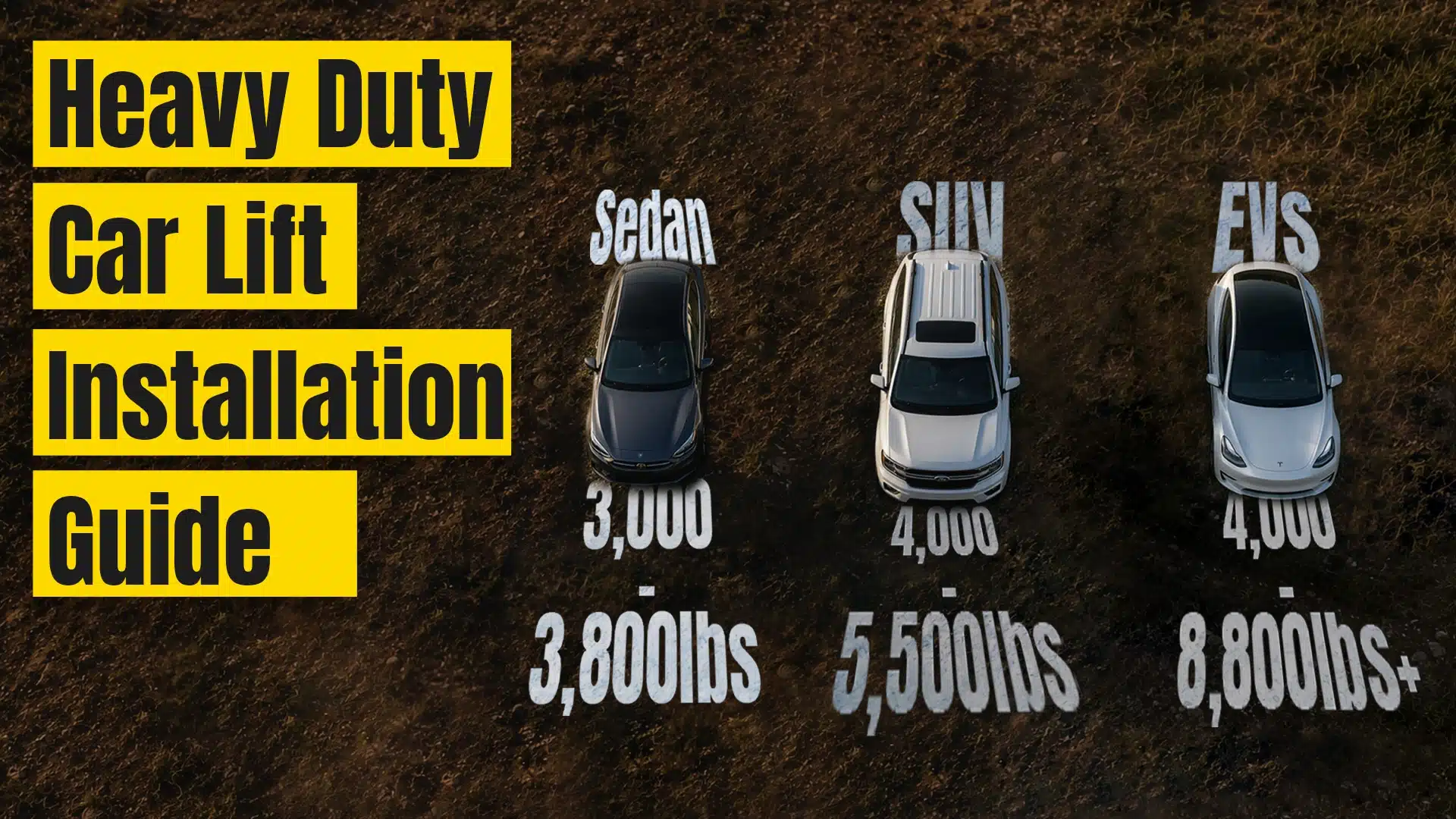
Introduction: Why Vehicle Type Defines Your Lift Installation Strategy
Installing a 4-post car lift is often seen as a straightforward garage upgrade. In reality, it is a structural decision that directly affects safety, long-term usability, and overall investment cost.
Whether you’re planning a 4 post parking lift for home, upgrading a workshop, or designing a storage system for multiple vehicles, your vehicle mix — sedans, SUVs, and EVs — determines everything from load calculations to installation complexity and ultimately your car lift installation cost.
For reference on general lift categories and standards, organizations like the International Parking & Mobility Institute provide useful industry-level guidance on parking and vehicle infrastructure systems.
1. Key Differences Between Sedans, SUVs, and EVs
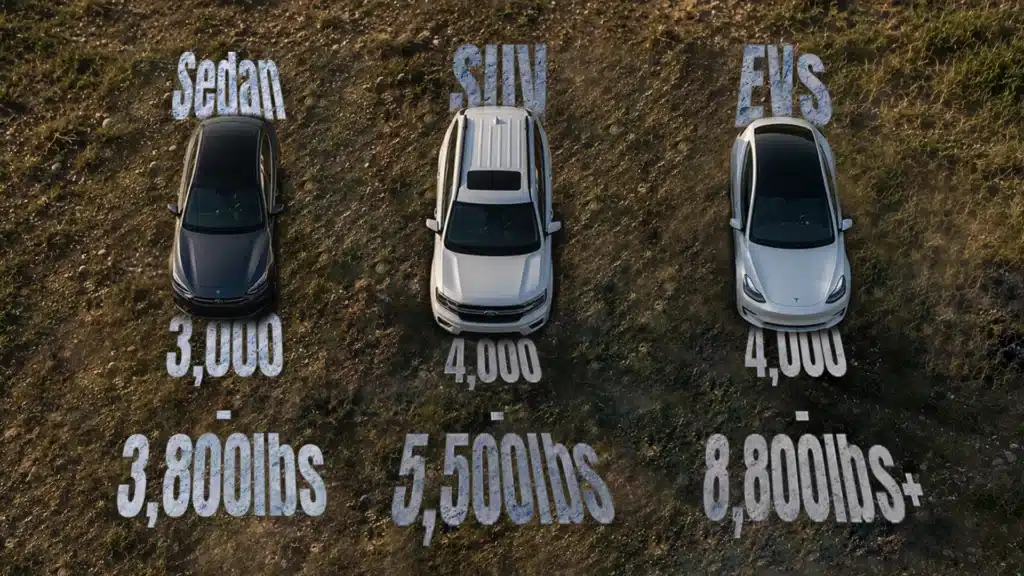
Before choosing a heavy duty car lift, you need to understand how each vehicle behaves structurally.
Sedans: Lightweight and Predictable
Sedans are typically:
- Lower curb weight
- Balanced load distribution
- Easier entry/exit geometry
- Standard wheelbase dimensions
They are the most compatible with entry-level lift systems and represent the baseline design assumption for most residential setups.
SUVs: Heavier and Structurally Demanding
SUVs introduce:
- Higher total weight
- Taller center of gravity
- Larger wheelbase variations
- Increased structural load on lift platforms
This makes SUVs a key reason why many installations upgrade to a heavy duty car lift rather than standard models.
EVs: The Most Demanding Category
EVs differ significantly due to:
- Heavy battery packs under the chassis
- High total vehicle weight
- Even weight distribution but higher structural load
- Sensitive underbody components
Research published by MDPI Vehicles Journal explains how modern EV battery packs are integrated into the underbody structure, significantly affecting vehicle weight distribution, structural stiffness, and overall load behavior.
2. Sedan Installation on a 4 Post Parking Lift for Home
Sedans are the simplest category for a 4 post parking lift for home installation.
Installation Characteristics
- Standard concrete slabs are usually sufficient
- Lower anchoring stress
- Minimal structural reinforcement required
- Easier leveling and alignment
Car Lift Installation Cost (Sedans)
Sedan installations represent the baseline cost level.
Typical cost components:
- Basic anchoring hardware
- Standard electrical setup
- Standard labor installation time
👉 This is the most cost-efficient scenario for any residential lift project.
For general mechanical infrastructure comparison, engineering references like ADA Parking Design Standards provide deeper technical background.
3. SUV Installation with Heavy Duty Car Lift Systems
SUVs require a more robust configuration, typically involving a heavy duty car lift system.
⚠ Installation Considerations
1. Structural Load Increase
SUVs significantly increase stress on:
- lift columns
- runway beams
- anchoring points
2. Height and Clearance Challenges
SUVs often require:
- higher ceiling clearance
- precise stacking geometry
- careful vertical planning
3. Load Variability
Cargo weight changes affect stability during lifting cycles.
Car Lift Installation Cost (SUVs)
SUV installations typically increase overall cost due to:
- stronger lift system requirements
- reinforced slab anchoring
- additional safety margins
- more complex labor
👉 Expect 20–40% higher cost compared to sedan installations.
4. EV Installation: Highest Demand on Heavy Duty Car Lift Systems
EVs represent the most complex installation category for any heavy duty car lift.
⚠ Critical Installation Precautions
1. High Vehicle Weight
EVs often exceed SUVs in total mass due to battery systems.
2. Battery Protection Requirements
Underbody battery packs require:
- precise lift point alignment
- zero structural interference
- careful platform positioning
3. Continuous Load Stress
Unlike ICE vehicles, EVs maintain constant heavy weight distribution.
4. Electrical Integration Needs
EV garages may require:
- charging station coordination
- upgraded power infrastructure
- load balancing planning
Car Lift Installation Cost (EVs)
EV installations fall into the highest cost category.
Cost drivers include:
- EV-rated heavy duty car lift requirements
- possible slab reinforcement
- higher engineering safety factors
- EV-specific calibration and testing
👉 Expect 40–80% higher cost compared to sedan installations.
Deep insight of EVs battery consideration references:
- A review on structural and mechanical insights into electric vehicle battery packs: Subsystems, standards, and design innovations
- Avoiding structural redundancies between the vehicle body and the battery housing based on a functional integration approach
Four post is too much? Check out Two Posts that might be good for you.
5. Cost Comparison Overview
| Vehicle Type | Lift Type | Complexity | Car Lift Installation Cost |
|---|---|---|---|
| Sedan | Standard 4 post parking lift for home | Low | 💲 Low |
| SUV | Heavy duty car lift | Medium | 💲💲 Medium |
| EV | Heavy duty EV-rated lift | High | 💲💲💲 High |
6. Choosing the Right 4 Post Parking Lift for Home
When selecting a 4 post parking lift for home, many buyers focus only on price or size. However, long-term success depends on future vehicle compatibility.
Modern households increasingly include:
- SUVs
- EVs
- luxury performance vehicles
This is why many professionals recommend choosing a heavy duty car lift even for residential use, especially when future vehicle upgrades are expected.
For more product context, you can explore technical references such as:
When Does a Standard 4 Post Lift Become a Heavy-Duty Requirement?
Vehicle selection should begin with actual vehicle weight and dimensions rather than the vehicle name alone.
SUVs, pickups, and many EVs can require higher capacity than a standard passenger-car configuration. The correct lift should therefore be selected according to the vehicle’s actual gross weight, dimensions, wheelbase, and the manufacturer’s rated capacity.
Installation planning should then verify that the slab, anchoring arrangement, platform dimensions, clearance, and safety system are compatible with the selected capacity.
Final Insight: Installation Is Not Just Equipment Selection
A car lift is not simply a mechanical product — it is a structural system integrated into your building environment.
The real drivers of cost are:
- vehicle type (sedan, SUV, EV)
- required load capacity
- structural reinforcement needs
- electrical and safety integration
- future usage scenarios
Choosing the right heavy duty ones and properly planning your 4 post parking lift setup ensures:
- long-term safety
- reduced maintenance cost
- better space utilization
- future-proof vehicle compatibility
For the general assembly sequence, see our 4 post car lift installation instructions.
Installation Requirements
Before installing a heavy-duty system, review the parking lift installation requirements for structural and electrical planning.
Conclusion
Sedans are simple and predictable. SUVs introduce structural complexity. EVs redefine the entire installation standard.
In modern garage planning, lift selection is no longer just a purchase decision — it is a long-term engineering investment that directly impacts safety, cost efficiency, and usability.
❓ Frequently Asked Questions (FAQs)
1. What is the difference between a regular lift and a heavy duty car lift?
A heavy duty car lift is designed to handle higher vehicle weights, reinforced structural loads, and more demanding usage cycles compared to standard residential lifts.
While regular lifts are typically suitable for lighter sedans, heavy duty systems are engineered to support:
- SUVs
- large sedans
- electric vehicles (EVs)
- commercial-use vehicles
They also offer stronger columns, thicker steel construction, and higher safety margins for long-term reliability.
2. Can I install a 4 post parking lift for home in a standard garage?
Yes, a 4 post parking lift for home is specifically designed for residential applications.
However, installation depends on several conditions:
- ceiling height clearance
- concrete slab strength
- garage width and length
- intended vehicle type (sedan, SUV, or EV)
Most residential garages can support sedan-based setups, while SUVs and EVs may require a heavy duty car lift configuration for safety.
3. How much does car lift installation cost on average?
The car lift installation cost varies depending on vehicle type, lift capacity, and site conditions.
General breakdown:
- Sedan setup → lowest cost (standard installation)
- SUV setup → moderate increase due to structural reinforcement
- EV setup → highest cost due to weight and safety requirements
Additional factors affecting cost include:
- concrete reinforcement needs
- electrical upgrades
- ceiling modifications
- installation complexity
4. Is a heavy duty car lift necessary for SUVs and EVs?
In most cases, yes.
SUVs and EVs place significantly higher stress on lift systems due to:
- increased total vehicle weight
- larger structural footprint
- different load distribution patterns (especially EVs)
A heavy duty car lift ensures proper safety margins, longer equipment lifespan, and stable operation under repeated use.
5. Does vehicle type affect installation safety?
Yes, significantly.
- Sedans → low risk, easier alignment
- SUVs → medium structural load, requires stronger anchoring
- EVs → highest safety requirement due to weight and battery placement
Proper selection of a heavy duty car lift ensures that safety margins are maintained across all vehicle types.
6. How long does car lift installation usually take?
Typical installation time:
- Residential sedan setup → 1 day
- SUV or reinforced setup → 1–2 days
- EV-ready heavy-duty setup → 2+ days depending on slab preparation
Time may increase if concrete reinforcement or electrical upgrades are required.
7. What is the most important factor before installing a car lift?
The most critical factor is structural compatibility, especially:
- concrete slab strength
- ceiling height
- vehicle weight planning
- long-term usage expectations
Choosing the correct system upfront (especially a heavy duty car lift if needed) prevents costly upgrades later.