
Parking Lift Turning Radius: 7 Vehicle Movement Planning Tips Before Installing a Car Lift
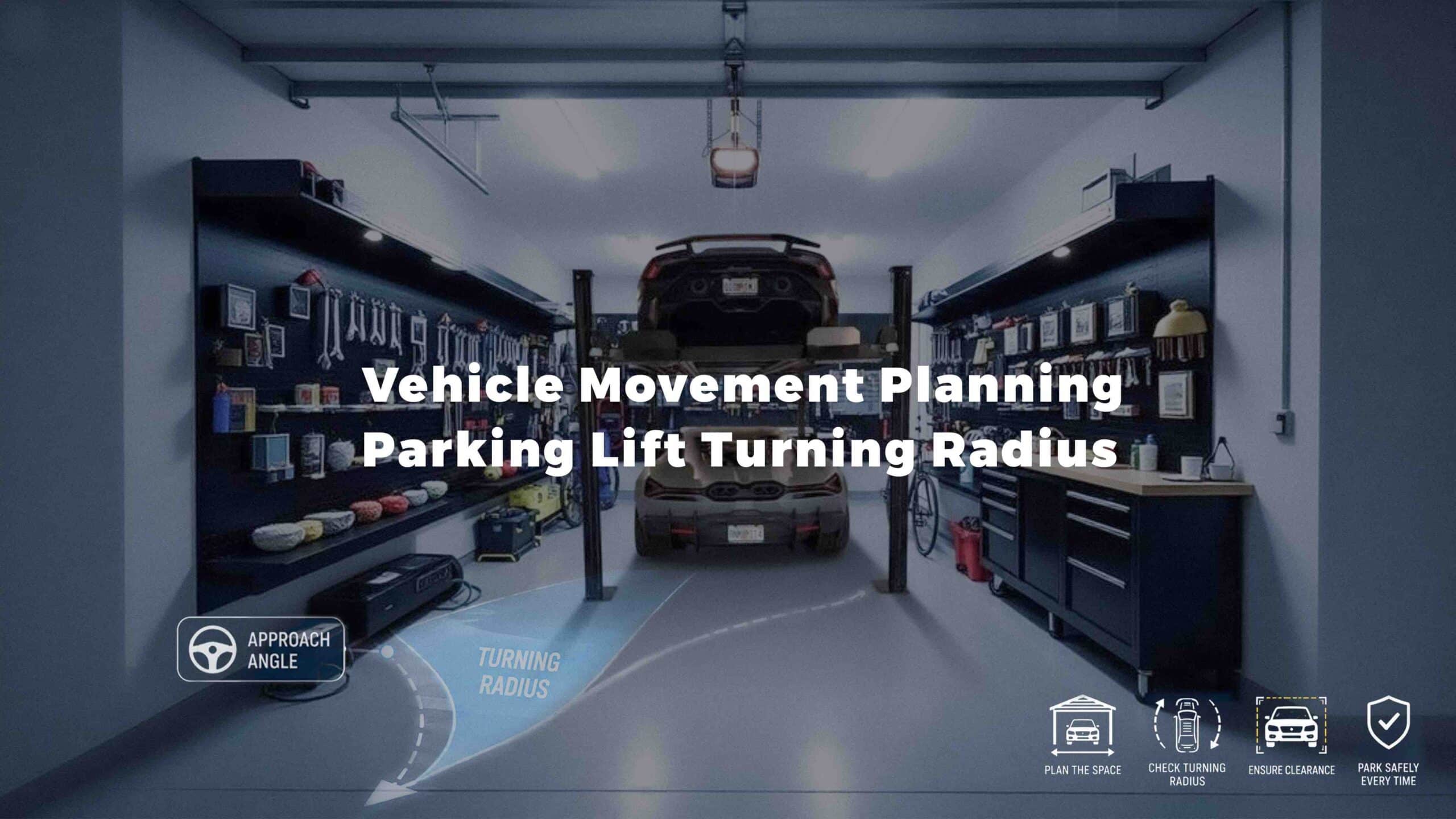
Most homeowners think installing a parking lift is simply a matter of measuring ceiling height and choosing the right lifting capacity.
Unfortunately, many discover the real challenge only after the lift has been installed.
Their vehicle fits the platform—but getting onto it requires multiple corrections, reversing, or even backing out and trying again.
The problem isn’t the lift.
It’s parking lift turning radius and vehicle movement planning.
Whether you’re installing a SolidParking 2 post car lift for a home garage or a 4 post parking lift for long-term vehicle storage, successful installation depends on more than dimensions. Your vehicle must be able to approach, align, enter, and exit the lift safely and comfortably.
This guide explains how to plan vehicle movement before installation so your parking lift works as efficiently in everyday use as it does on paper.
Why Parking Lift Turning Radius Matters
Imagine buying a new sofa.
You measure the living room carefully, place the order, and when it arrives, it technically fits—but you can’t get it through the front door.
A parking lift can create the same situation.
Many buyers focus on:
- Lift capacity
- Ceiling height
- Platform dimensions
These specifications are essential, but they don’t guarantee that your vehicle can actually drive onto the lift with ease.
That’s where parking lift turning radius comes in.
In reality, what you’re planning is not just the turning capability of the vehicle, but the complete movement of the vehicle from the garage entrance to the lift platform.
Professional designers call this vehicle movement planning.
It determines whether daily parking feels effortless—or frustrating.
Parking Lift Turning Radius vs. Vehicle Movement Planning
Although these terms are closely related, they are not the same.
Parking lift turning radius refers to the amount of space a vehicle needs to complete a turn before entering the lift.
Vehicle movement planning is much broader.
It considers every movement the driver makes before reaching the parking position.
This includes:
- Garage entrance width
- Driveway alignment
- Vehicle wheelbase
- Turning angle
- Lift location
- Platform orientation
- Column spacing
- Wall clearance
- Driver visibility
A vehicle may have an acceptable turning radius on paper but still struggle to enter the lift because the garage layout restricts movement.
This distinction is one of the most overlooked aspects of parking lift installation requirements.
Vehicle movement planning depends on steering geometry, wheelbase, and overall vehicle dimensions—topics extensively studied by SAE International.
Seven Factors That Affect Vehicle Movement Planning
1. Vehicle Size
A compact sedan and a full-size SUV behave very differently inside the same garage.
Larger vehicles require:
- wider turning paths
- more steering correction
- greater stopping distance
If you expect to upgrade to a larger vehicle in the future, plan for it now rather than redesigning your garage later.
2. Wheelbase
Wheelbase often has a greater impact than overall vehicle length.
Vehicles with longer wheelbases naturally require larger turning arcs and need more space to align with a parking lift.
Examples include:
- Cadillac Escalade
- Chevrolet Suburban
- Ford Expedition
- GMC Yukon
3. Garage Width
Many homeowners measure whether the lift physically fits inside the garage.
A better question is:
Can the driver comfortably turn into the lift without repeated adjustments?
Extra garage width often improves usability more than extra garage depth.
4. Driveway Approach
The driveway determines how the vehicle enters the garage.
Common layouts include:
- Straight approach
- Side-entry garage
- Curved driveway
- Sloped driveway
A straight approach usually allows easier alignment with both 2 post and 4 post parking lifts.
Side-entry garages often require additional planning.
5. Lift Orientation
The position of the lift significantly influences vehicle movement.
For example, rotating the lift slightly or shifting it laterally may improve the approach angle and reduce unnecessary steering corrections.
Professional layout planning often identifies better lift positions that homeowners may overlook.
6. Column Clearance
For a 2 post lift, column placement affects:
- steering angle
- mirror clearance
- door opening
- driver confidence
For a 4 post lift, columns define the entrance to the runways, making alignment even more important.
7. Future Vehicle Changes
Many garages are designed around today’s vehicle.
However, families often upgrade from a sedan to an SUV or pickup truck.
Planning for future vehicle dimensions helps maximize the long-term value of your parking lift investment.
Before selecting a parking lift, compare your vehicle’s dimensions with the manufacturer’s specifications. The National Highway Traffic Safety Administration (NHTSA) provides valuable vehicle safety resources, while manufacturers publish detailed dimensions for each model.
Vehicle Movement Planning for SolidParking 2 Post Car Lifts
SolidParking’s TP Series 2 post lifts are designed to maximize parking efficiency while maintaining open vehicle access.
Compared with four post lifts, the open-center design provides greater flexibility during parking.
Advantages include:
- Easier vehicle alignment
- Better side access
- More steering correction room
- Simpler driver positioning
However, parking lift turning radius remains an important consideration.
Before installation, confirm:
- Garage entrance width
- Column spacing
- Vehicle width including mirrors
- Steering clearance
- Door opening space
A properly planned 2 post lift should allow the driver to approach in one smooth movement rather than requiring repeated adjustments.
Related Reading:
Vehicle Movement Planning for SolidParking 4 Post Parking Lifts
A 4 post parking lift provides excellent stability and is ideal for vehicle storage and long-term parking.
However, because the vehicle must drive directly onto the runways, alignment becomes more critical.
Planning should include:
- Platform width
- Platform length
- Entry angle
- Wheel positioning
- Turning radius before the platform
Unlike a 2 post lift, there is less flexibility for steering corrections once the front wheels reach the runways.
For this reason, proper vehicle movement planning is especially important for:
- luxury vehicles
- collector cars
- large SUVs
- family garages with limited space
Related Reading:
Large SUVs Require More Than Lift Capacity
One of the biggest mistakes homeowners make is focusing only on lift capacity.
For example, a lift may safely support a Cadillac Escalade.
That does not necessarily mean the Escalade can comfortably enter the lift.
Large SUVs require:
- greater turning space
- wider garage entrances
- longer approach distances
- more accurate alignment
Planning for these requirements before installation dramatically improves daily usability.
Common Garage Planning Mistakes
Only Measuring Ceiling Height
Vertical clearance is only one part of successful planning.
Horizontal vehicle movement is equally important.
Ignoring Vehicle Movement
A garage that appears spacious may still force awkward parking movements.
Testing the approach path before installation helps avoid frustration.
Choosing the Lift Before Designing the Layout
The best process is the opposite.
First:
Design vehicle movement.
Then:
Select the lift that fits that movement.
Forgetting Future Vehicles
Today’s sedan may become tomorrow’s SUV.
Planning for future vehicle dimensions protects your investment.
Professional parking designers often evaluate circulation, aisle width, and vehicle movement before selecting equipment. The International Parking & Mobility Institute (IPMI) provides industry resources on parking planning and mobility design.
Final Checklist Before Installing a Parking Lift
Before purchasing any parking lift, verify the following:
✓ Vehicle length
✓ Vehicle width
✓ Vehicle wheelbase
✓ Garage width
✓ Garage depth
✓ Ceiling height
✓ Driveway approach angle
✓ Parking lift turning radius
✓ Vehicle movement planning
✓ Lift orientation
✓ Future vehicle needs
A professional layout review can identify potential issues before installation begins, saving time and avoiding costly modifications.
Conclusion
Choosing the right parking lift is only part of the planning process.
The real goal is creating a garage where the vehicle can move naturally, align confidently, and park safely every day.
By considering parking lift turning radius together with vehicle movement planning, homeowners, architects, and developers can avoid unnecessary design compromises and maximize every square foot of available space.
Whether you’re installing a SolidParking 2 post car lift or a 4 post parking lift, planning the vehicle’s path before purchasing the equipment is one of the smartest decisions you can make.
Need help planning your garage? Send your garage dimensions and vehicle information to the SolidParking team for a free parking lift layout review. We’ll help you select the right lift and optimize your vehicle movement before installation.
Frequently Asked Questions
Does every parking lift require turning radius planning?
Yes. Every parking lift benefits from evaluating parking lift turning radius to ensure the vehicle can safely approach, align with, and enter the lift. The larger the vehicle, the more important this becomes.
What is vehicle movement planning?
Vehicle movement planning is the process of evaluating how a vehicle travels from the garage entrance to its final parking position. It includes turning radius, approach angle, garage dimensions, lift placement, and driver maneuverability.
Are 2 post car lifts easier to enter than 4 post parking lifts?
Generally, yes. The open-center design of a 2 post lift offers greater flexibility during alignment. A 4 post lift requires the vehicle to be positioned more accurately on the runways.
Do SUVs need more turning space for parking lifts?
Yes. Full-size SUVs and pickup trucks typically require wider approach angles and more maneuvering space than sedans, making vehicle movement planning particularly important.
Should I plan for future vehicles when installing a parking lift?
Absolutely. If you expect to upgrade to a larger SUV, truck, or EV in the coming years, incorporating that into your garage layout now can help avoid expensive modifications later.