
Automatic Multi Level Car Parking: 7 Powerful Reasons Developers Are Switching to Automated Parking Systems
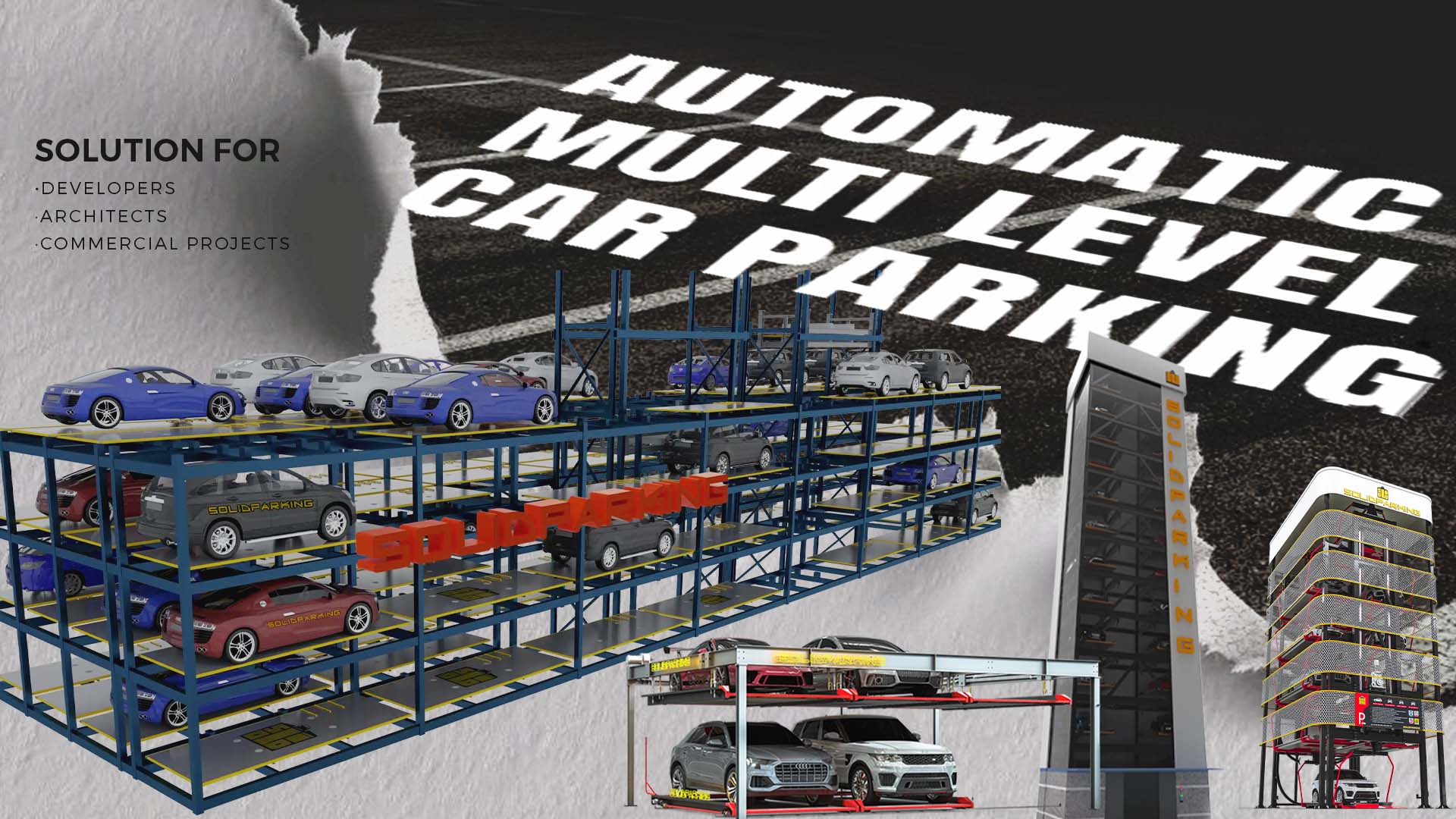
Automatic Multi Level Car Parking Is No Longer “Future Technology”
For years, automatic multi level car parking systems were treated as futuristic engineering concepts reserved for luxury towers or ultra-dense cities.
That perception is changing rapidly.
Today, developers are adopting automated parking because traditional parking garages are becoming economically inefficient.
Land prices continue rising.
Excavation costs are increasing.
Urban sites are becoming tighter.
And parking regulations still require large numbers of parking spaces.
This creates a serious development problem:
Parking consumes some of the most valuable square footage in a project while generating very little direct revenue.
That is why developers, architects, and commercial property owners are increasingly turning toward automatic multi level car parking solutions as a practical infrastructure strategy — not simply a technology upgrade.
Table of Contents
Why Traditional Parking Garages Are Quietly Draining Project Profitability
Most people assume parking garages are simple.
They are not.
Traditional parking structures require enormous amounts of non-revenue-generating space, including:
- Driving aisles
- Turning radiuses
- Ramp systems
- Human circulation paths
- Ventilation systems
- Lighting infrastructure
- Safety clearance zones
In many projects, nearly half of the parking structure is dedicated to vehicle movement rather than vehicle storage.
That inefficiency becomes increasingly expensive in urban developments.
Especially in:
- Mixed-use projects
- Apartment towers
- Luxury residential developments
- Commercial podiums
- CBD developments
- Transit-oriented developments
The higher the land value, the more financially painful inefficient parking becomes.
What Is an Automatic Multi Level Car Parking System?
An automatic multi level car parking system is a robotic parking solution that automatically stores and retrieves vehicles using lifts, shuttles, pallets, or transfer systems.
Instead of driving through ramps and searching for parking spaces, drivers simply:
- Enter a transfer cabin
- Exit the vehicle
- Allow the system to automatically park the car
The vehicle is then transported vertically and horizontally into an optimized storage position.
Because drivers never enter the internal storage area, the parking structure no longer requires:
- Large ramps
- Wide circulation lanes
- Human-access driving paths
This dramatically increases parking density.
Traditional Parking vs Automatic Multi Level Car Parking
| Feature / Comparison Factor | Traditional Parking Garage | Automatic Multi Level Car Parking |
|---|---|---|
| Space Efficiency | Low | Very High |
| Ramp Requirement | Required | Not Required |
| Vehicle Circulation | Large driving aisles needed | Minimal circulation space |
| Parking Density | Moderate | High-density storage |
| Excavation Volume | High | Reduced |
| User Driving Inside Garage | Yes | No |
| Vehicle Damage Risk | Higher due to human driving | Lower due to automated handling |
| EV Charging Integration | Limited flexibility | Easier centralized planning |
| Architectural Flexibility | Restricted by ramps and circulation | Improved layout flexibility |
| Land Utilization | Lower efficiency | Optimized land usage |
Why Parking Density Is the Real Economic Advantage
Most discussions around automated parking focus on technology.
But developers care about economics.
The true value of automatic multi level car parking is not the robotics.
It is the ability to recover usable real estate.
By eliminating ramps and inefficient circulation space, developers can:
- Increase parking capacity
- Recover sellable floor area
- Improve FAR efficiency
- Reduce underground excavation
- Optimize podium layouts
- Increase project feasibility
In high-density urban projects, recovering even a small amount of additional usable floor area can dramatically improve overall project profitability.
Traditional Parking Garage
[ Ramp ]
   ↓
[ Drive Aisle ]
   ↓
[ Turning Radius ]
   ↓
[ Parking Space ]
Large portions of the structure are consumed by circulation.
Automatic Multi Level Car Parking
[ Transfer Cabin ]
        ↓
[ Robotic Lift ]
        ↓
[ Dense Vehicle Storage ]
The structure focuses primarily on storage efficiency.
Why Excavation Costs Are Pushing Developers Toward Automated Parking
Underground parking is becoming one of the most expensive parts of construction.
Especially in urban projects.
Costs include:
- Excavation
- Soil retention
- Waterproofing
- Structural reinforcement
- Ramp construction
- Ventilation systems
- Fire systems
- Drainage infrastructure
As underground depth increases, costs rise exponentially.
Automatic multi level car parking systems help reduce wasted underground volume because they eliminate many of the circulation requirements found in traditional garages.
For constrained sites, this can significantly improve development efficiency.
EV Compatibility: One of the Biggest Misunderstandings
One of the most common questions developers and property owners ask is:
“Can EVs safely use automated parking systems?”
The answer is increasingly yes.
In fact, many modern automatic multi level car parking systems are now being designed specifically with EV compatibility in mind as electric vehicle adoption continues to accelerate globally.
Today’s automated parking systems can accommodate:
- Higher EV vehicle weights
- Larger SUV and EV dimensions
- EV-ready platform configurations
- Centralized charging infrastructure planning
- Smart power management integration
- Controlled charging environments
This is an important shift because EV infrastructure is becoming a critical part of future building development.
In traditional parking garages, EV charging layouts are often scattered throughout multiple parking levels, making cable routing, power distribution, and long-term infrastructure management more complicated and expensive.
Automated parking systems offer a different approach.
Because vehicles are stored within a more controlled and centralized environment, developers can plan charging infrastructure more efficiently from the beginning. This can simplify power distribution, reduce unnecessary infrastructure duplication, and improve long-term scalability as EV demand grows.
For architects and developers planning future-ready projects, this creates an additional strategic advantage:
Parking infrastructure no longer needs to be designed only for today’s vehicles — it can evolve alongside the future of mobility.
Global organizations such as the International Energy Agency (IEA) continue reporting rapid growth in EV adoption and charging infrastructure demand worldwide. As electric vehicles become increasingly mainstream, parking systems that support EV integration are expected to become an important consideration in modern urban development and commercial property planning.
Why Architects Prefer Automated Parking Layouts
Architects often find traditional parking garages difficult to work with because ramps and vehicle circulation paths end up shaping a large portion of the building layout. In many projects, parking design affects far more than just vehicle storage — it directly influences the overall architectural flexibility of the development.
Conventional parking structures can impact:
- Structural grid planning
- Core positioning
- Ground-floor activation
- Façade design opportunities
- Pedestrian circulation
- Landscape integration
Because automatic multi level car parking systems eliminate the need for internal driving circulation, architects gain far more freedom when planning the building layout. Without large ramps and wide drive aisles consuming valuable space, projects can achieve cleaner podium designs, more efficient land utilization, and improved integration between parking, commercial areas, and public spaces.
This flexibility becomes especially valuable in high-density urban developments where every square meter matters.
Types of Automatic Multi Level Car Parking Systems
Different projects require different parking technologies.
Tower Parking System
Best for:
- High-rise projects
- Dense urban sites
- Narrow footprints
Advantages:
- Extremely high vertical efficiency
- Minimal land consumption
- Large parking capacity
Shuttle Parking System
Best for:
- Airports
- Commercial developments
- Public infrastructure
Advantages:
- High throughput
- Fast retrieval
- Scalable layouts
7 Powerful Reasons Why the SSP Chess Parking System Outperforms Traditional Automated Parking
Puzzle Parking System
Best for:
- Apartment projects
- Medium-density developments
- Retrofit buildings
Advantages:
- Flexible configuration
- Semi-automated efficiency
- Cost-effective density improvement
See PPS-2-1: A Smarter Puzzle Parking System With Basement Level for Urban Sites
Rotary Parking System
Best for:
- Small urban sites
- Tight commercial lots
- Retrofit spaces
Advantages:
- Compact installation
- Fast deployment
- Efficient vertical storage
Solid Parking’s Work of RPS
Revolutionizing Urban Space: The Rotary Parking System by SolidParking
The Real ROI of Automated Parking
Developers increasingly evaluate parking systems based on total project economics.
Not simply equipment cost.
A higher-density parking system can improve:
| Financial Factor | Potential Impact |
|---|---|
| Sellable Area | Increased |
| Excavation Costs | Reduced |
| Land Utilization | Improved |
| Construction Complexity | Reduced |
| Parking Capacity | Increased |
| Property Value | Enhanced |
| Premium User Experience | Improved |
In many urban developments, parking efficiency directly affects overall project feasibility.
Why Choosing the Right Mechanical Parking System Manufacturer Matters
The biggest concern with automated parking is reliability.
And rightly so.
Parking infrastructure is expected to operate continuously for decades.
That is why selecting an experienced mechanical parking system manufacturer is critical.
Developers should evaluate:
- Structural engineering quality
- Hydraulic system reliability
- Safety locking systems
- Redundant control systems
- Maintenance accessibility
- Spare parts availability
- Installation experience
- International project support
The difference between a reliable automated parking system and a problematic one is usually not the concept itself.
It is engineering execution.
Why SolidParking Focuses on Practical Parking Efficiency
As a mechanical parking system manufacturer, SolidParking focuses on combining:
- Parking density optimization
- Structural reliability
- Commercial practicality
- Flexible project layouts
- Long-term operational stability
Rather than treating automated parking as futuristic marketing, the focus is on solving real development constraints:
- Limited land
- Rising construction costs
- Urban parking shortages
- Higher parking requirements
- EV-ready infrastructure
For modern projects, parking is no longer just a building requirement.
It is part of overall project optimization.
Conclusion: Parking Is Becoming a Land Optimization Strategy
The future of parking is no longer about storing more vehicles.
It is about using urban space more intelligently.
Automatic multi level car parking systems are gaining momentum because they solve multiple modern development pressures simultaneously:
- Rising land costs
- Urban density
- Excavation expenses
- Parking regulations
- EV infrastructure planning
- User experience expectations
For developers, architects, and commercial property owners, parking efficiency is no longer secondary infrastructure.
It directly affects profitability, flexibility, and long-term project value.
And that is why automated parking is increasingly becoming part of mainstream urban development strategy.
FAQs About Automatic Multi Level Car Parking
Is automatic multi level car parking safe?
Yes. Modern systems include multiple safety systems such as sensors, hydraulic protections, mechanical locks, and intelligent control systems designed for long-term operational safety.
Can EV vehicles use automated parking systems?
Yes. Modern automated parking systems are increasingly designed to accommodate EV dimensions, vehicle weights, and centralized charging integration.
Are automated parking systems suitable for apartments?
Absolutely. Apartment developments are one of the fastest-growing applications for automatic multi level car parking because they help increase parking density without expanding the building footprint.
What is the biggest advantage of automated parking?
The biggest advantage is space efficiency. Automated systems significantly reduce the circulation space required in traditional parking garages.
How long do automated parking systems last?
With proper engineering and maintenance, commercial automated parking systems are designed for long-term operation over many years.
Why is choosing the right mechanical parking system manufacturer important?
Because long-term reliability depends heavily on engineering quality, safety systems, maintenance support, and manufacturer experience.