If you’re a developer, architect, or property manager, you know the drill: land is expensive, cars keep multiplying, and traditional garages gobble up precious space with ramps, turning radii, and dead zones.
Mechanical parking systems are the solution — and when it comes to maximizing land use, two systems dominate the conversation: stack parking and puzzle parking.
While stackers get the job done for small projects, automated puzzle-style parking systems are where the real ROI lives. Let’s break down 3 proven reasons developers should consider puzzle parking over stack parking.
1. Puzzle Parking Towers Maximize Density Like Nothing Else
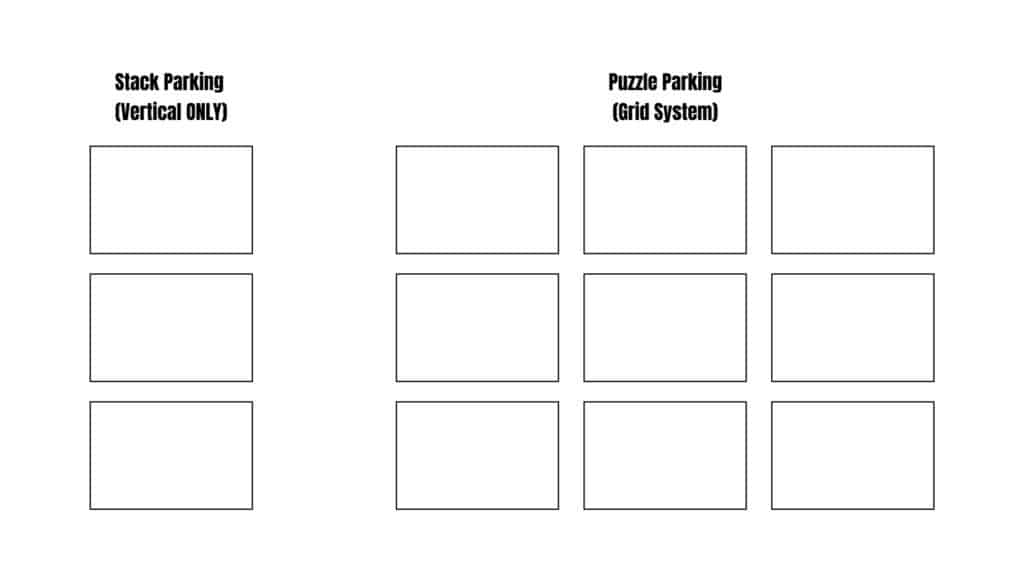
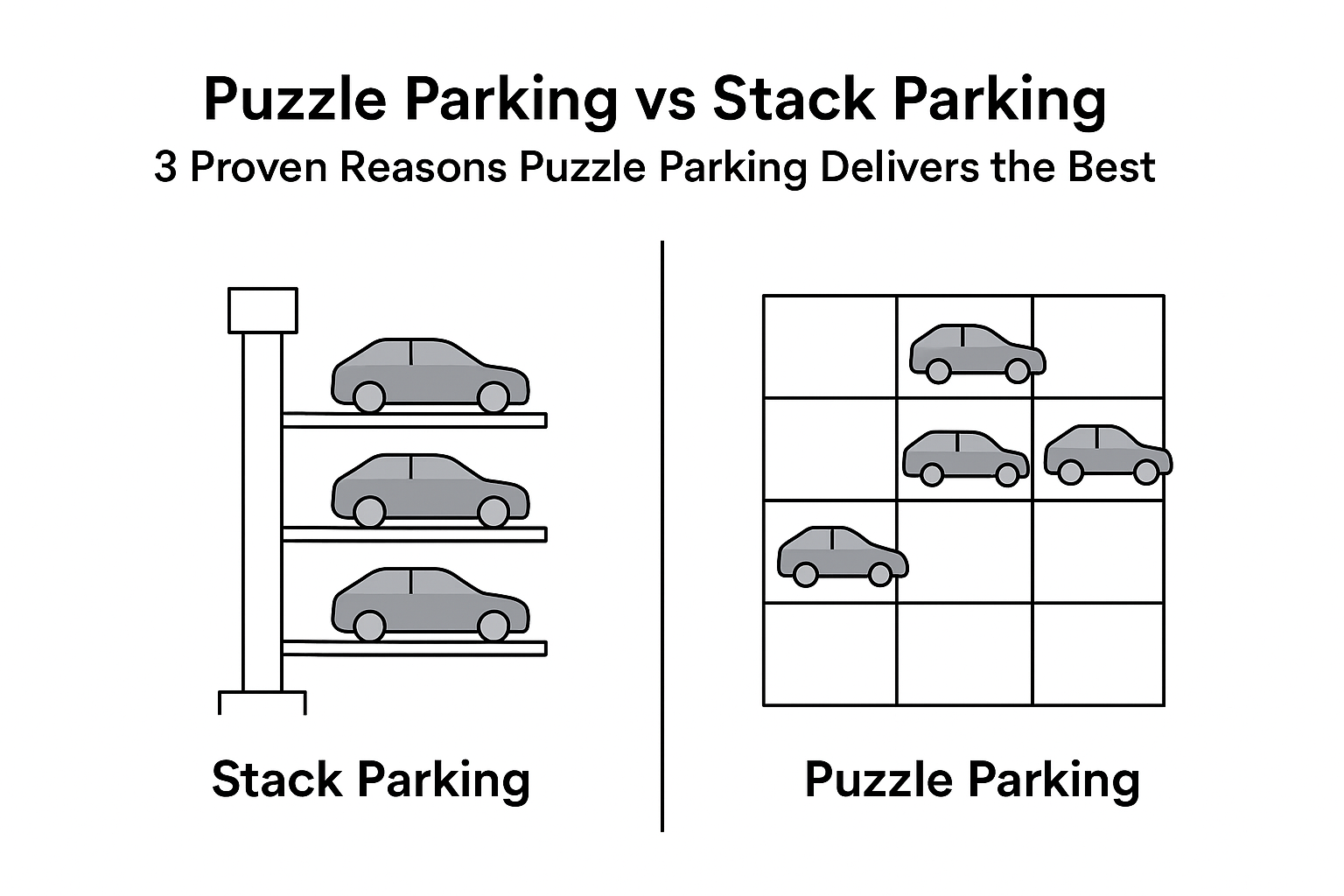
Stack parking = cars placed vertically on lifts, usually 2–3 high, sometimes 4 if space allows. Puzzle parking = platforms that slide vertically and horizontally, shuffling like a sliding puzzle so each car is accessible independently.
Here’s a quick comparison table:
Feature
Stack Parking
Puzzle Parking
Capacity
2–3 cars per unit
5–50 cars depending on grid
Access
Dependent (move one to get another)
Independent retrieval
Scalability
Low
Medium (expand grid horizontally and vertically)
Best For
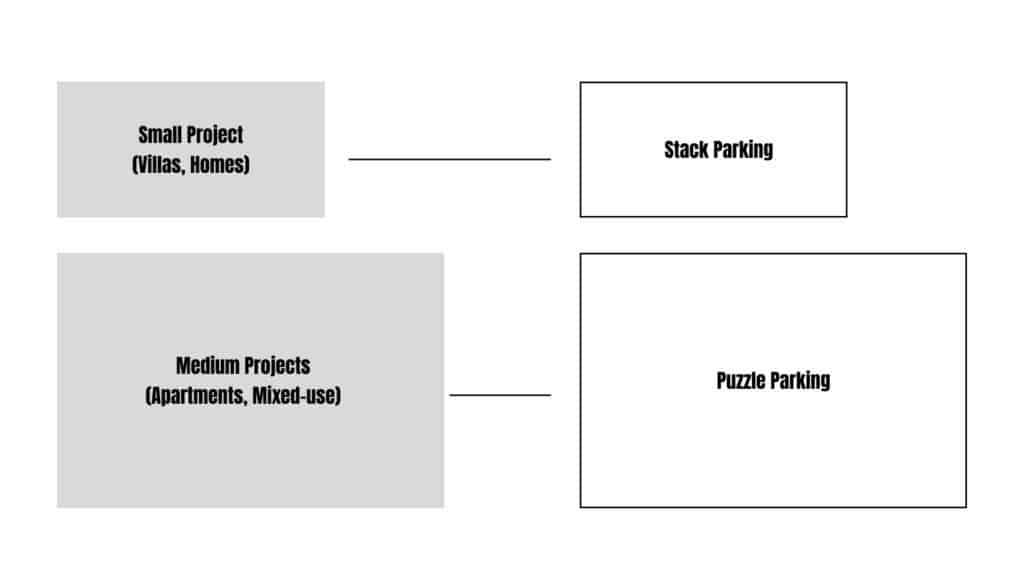
Homes, villas, small projects
Apartments, mixed-use, commercial lots
Keyword ROI
Low land-use gain
High land-use gain
Did You Know? A puzzle parking system can deliver 3–5× the capacity of a conventional garage on the same footprint — without ramps.
Simple sketch comparing stacker vs puzzle grid:
Stack vs Puzzle Parking System
The takeaway: if your project is anywhere near a high-density urban or redevelopment site, puzzle parking isn’t just an option — it’s a smart investment.
3. Installation & Operations: Stackers Are Simple, Puzzle Parking Is Smarter
Stack Parking
Straightforward install: concrete pad + lift + power. Maintenance is minimal. Downside? Cars often block one another.
Puzzle Parking
Requires careful prep: drainage, fire systems, and precise alignment. Even a 5 mm misalignment can cause issues. But once running, it’s button-click easy.
Did You Know? Modern automated parking solutions use limit switches and anti-fall locks, ensuring cars remain safe even if a motor fails (IPMI on Parking Technology).
Where Each System Shines
· Stack parking: Budget projects, villas, small residential lots.
A: Minimal training is required. One walkthrough is often enough for a building operator to manage the system.
Bottom Line
Puzzle parking vs stack parking: here’s what developers need to know:
· Density wins. Puzzle parking outperforms stackers in land efficiency.
· ROI is long-term. Stack parking looks cheap today; puzzle parking scales with your project.
· Installation is an investment. Properly installed, puzzle parking is smooth, safe, and long-lasting.
Did You Know? Puzzle parking is already standard in Tokyo and Seoul — cities where land costs make every square meter count. Developers elsewhere are quickly catching up.
Next time you’re weighing puzzle parking vs stack parking, ask: 👉 Do I want a short-term fix, or do I want a system that grows with my project?
Chances are, the answer looks a lot like puzzle parking.