
Garage Lift Ceiling Height Requirements: What Homeowners Learn About 2 Post Lift vs 4 Post Lift for Storage

Garage Lift Ceiling Height Requirements: Why “Technically Fits” Isn’t Always Comfortable
When researching garage lift ceiling height requirements, most homeowners start with one question:
“Can my garage fit a car lift?”
But after reading real homeowner discussions across Reddit, Quora, and garage forums, another pattern appears quickly:
A setup that technically works on paper can still feel frustrating in daily life.
Especially once:
- SUVs
- Tesla vehicles
- walk-under clearance
- garage door tracks
- future vehicle upgrades
become part of the equation.
The same thing happens when comparing a 2 post lift vs 4 post lift for storage. Most people initially focus on specifications, but experienced lift owners usually talk about something else entirely:
- comfort
- ease of parking
- stress levels
- daily convenience
- future-proofing the garage
And that difference matters more than most first-time buyers expect.
What Really Determines Garage Lift Ceiling Height Requirements?
The truth is that garage lift ceiling height requirements depend on far more than the lift itself.
Real-world usability is shaped by:
- vehicle size
- SUV vs sports car
- EV battery weight
- driver height
- walk-under clearance
- garage door layout
- storage vs maintenance goals
- future vehicle plans
Many first-time buyers search for the “minimum height.”
But experienced homeowners usually discover that:
minimum workable height and comfortable long-term height are not the same thing.
That distinction becomes especially important in residential garages used every day.
Why 10-Foot Garages Often Feel Smaller Than Expected
But in practice, things become tighter very quickly once:
- SUVs
- roof racks
- EVs
- taller drivers
- daily parking routines
enter the picture.
Several homeowners online describe 10 feet as:
“The absolute minimum.”
And that wording matters.
Because a setup that barely clears on paper can still feel stressful during everyday use.
Common frustrations include:
- limited walking space
- uncomfortable head clearance
- tight parking angles
- garage door interference
- difficulty stacking taller vehicles
Many homeowners later say they originally planned around minimum dimensions instead of comfortable dimensions.
Some inspiration about Garage Layout Design
Why Many Homeowners Prefer 12-Foot Ceilings
A common pattern appears repeatedly in homeowner discussions:
“10 feet works. 12 feet feels better.”
That difference is less about specifications and more about quality of life.
Walking Underneath Comfortably
One homeowner explained:
“I went 13′ so I could walk under them without banging my head.”
That sounds simple, but it reveals something important:
Most frustrations happen during everyday use, not during installation day.
Comfortable clearance changes:
- how relaxed parking feels
- whether family members enjoy using the lift
- how usable the garage remains long term
Future-Proofing for Larger Vehicles
Modern vehicles are getting taller and larger across North America.
Many homeowners originally planned around:
- sedans
- sports cars
- compact SUVs
only to realize later that:
- Tesla SUVs
- Rivian vehicles
- larger trucks
- roof-mounted accessories
change the garage layout entirely.
Planning only for today’s vehicles often becomes a long-term regret.
SUVs and Tesla Vehicles Are Changing Garage Planning
Residential garages built 15–20 years ago were not designed around today’s vehicle sizes.
That becomes obvious when stacking:
- Tesla Model X
- Rivian R1S
- large SUVs
- lifted trucks
Many homeowners researching garage lift ceiling height requirements discover that EVs and SUVs dramatically reduce usable clearance.
A garage that works perfectly for low sports cars may suddenly feel cramped once larger vehicles are involved.
Especially for:
- daily parking
- family garages
- long-term storage
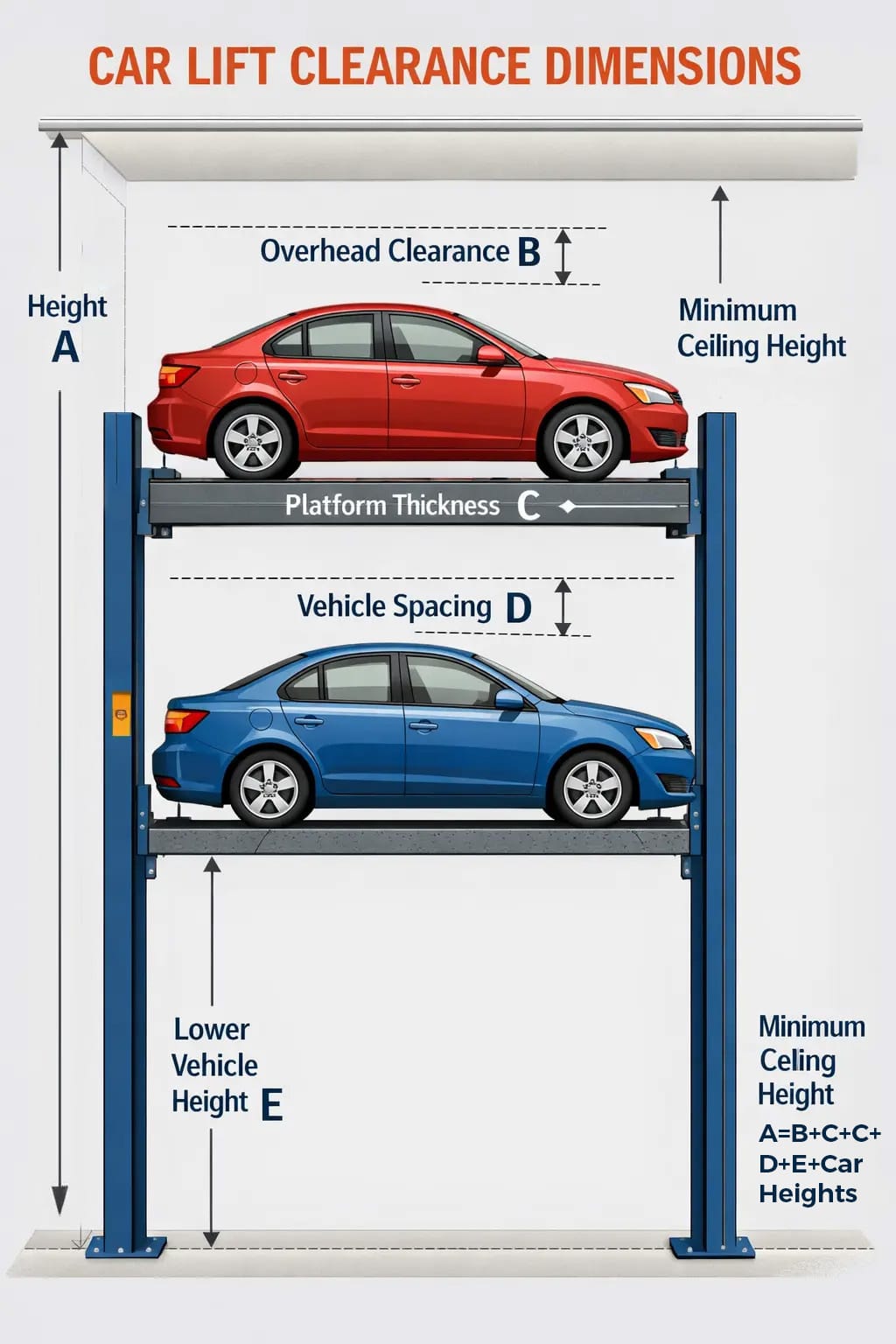
A Real-World Way to Calculate Garage Height
One of the most practical homeowner explanations online approaches the problem from a comfort perspective instead of a specification sheet.
The assumption is that the vehicle is factory-stock, not heavily modified.
The reasoning works like this:
- Most passenger vehicles are roughly 75–78 inches tall.
- Approximately 65 inches often exist between the chassis underside and roofline.
- The average North American male height is about 69 inches.
- Comfortable standing clearance underneath may require another 6 inches.
That creates:
- 75 inches of standing room
- plus 65 inches of vehicle height
For a total of roughly:
140 inches (11’8”)
The conclusion was simple:
“A ceiling height of 11’ would suffice for most vehicles and people. To err on the safe side, make it 12’.”
This type of practical thinking is often more useful than generic “minimum clearance” charts because it reflects actual homeowner experience.
2 Post Lift vs 4 Post Lift for Storage
Comparing a 2 post lift vs 4 post lift for storage usually comes down to how the garage will actually function day to day.
Why Many Homeowners Prefer 2-Post Lifts for Parking & Storage
For residential garages, many homeowners actually prefer 2-post lifts when the main goal is vehicle parking and long-term storage.
A 2-post lift allows:
cleaner floor usage underneath the vehicle
easier garage movement and flexibility
efficient stacked parking for collector cars
better use of limited garage width
open access around the vehicle
Because the wheels hang freely, many enthusiasts feel 2-post systems create a cleaner and more space-efficient storage setup.
For collector garages and long-term vehicle storage, 2-post lifts are often seen as a more flexible parking solution.
Why Many Enthusiasts Prefer 4-Post Lifts for Maintenance
While 4-post lifts are commonly associated with parking systems, many enthusiasts and workshops actually prefer them for maintenance work.
A 4-post lift provides:
stable vehicle positioning
easier drive-on access
better comfort during longer repair sessions
excellent support for heavier vehicles
safer feeling platform-style lifting
With bridge jacks or rolling jacks installed, a 4-post system becomes highly practical for:
tire service
suspension work
detailing
alignment work
general vehicle maintenance
Many mechanics also prefer the additional sense of stability during extended repair work.
Which Lift Feels Better Long Term?
For stacked parking, collector storage, and maximizing garage flexibility, many homeowners eventually lean toward 2-post lifts.
For maintenance-focused garages, repair shops, and long working sessions underneath vehicles, 4-post lifts remain extremely popular.
The best choice depends on:
vehicle type
garage dimensions
maintenance habits
storage goals
future vehicle plans
Neither system is universally “better” — the ideal lift depends entirely on how the garage will actually be used day to day.
The Garage Door Track Problem Nobody Mentions
One of the most overlooked residential lift issues is garage door track clearance.
Many homeowners assume ceiling height alone determines whether a lift will work.
But garage door systems often become the first real limitation.
Common issues include:
- opener placement
- track angles
- overhead rails
- lighting interference
This is why high-lift garage door conversions are frequently recommended alongside residential lift installations.
How to Make a Garage Door Smart
A homeowner’s aging garage door opener gets a smart home upgrade to improve convenience and control.
Many homeowners discover that garage door tracks become a bigger limitation than ceiling height itself. In many residential projects, a high-lift garage door conversion is recommended before installing a vehicle lift.
For homeowners researching track clearance and opener placement, the Clopay high-lift garage door guide provides a useful technical overview.
What Homeowners Usually Regret Later
After reviewing hundreds of homeowner discussions online, the same regrets appear repeatedly.
Most are not about buying the lift itself.
They are about underestimating space.
Common regrets include:
- not planning for larger future vehicles
- insufficient walking clearance
- tight parking layouts
- garage door track conflicts
- focusing only on “minimum” dimensions
One pattern appears consistently:
Most people regret not planning more space — not planning too much.
Recommended Garage Heights by Vehicle Type
| Vehicle Type | Minimum Practical Height | Recommended Comfortable Height |
|---|---|---|
| Sports Cars | 10 ft | 11–12 ft |
| Sedans | 10–11 ft | 12 ft |
| SUVs | 11–12 ft | 12–13 ft |
| Tesla / EVs | 11–12 ft | 12–13 ft |
| Maintenance Use | 12 ft | 13 ft+ |
Final Thoughts
The best garage lift setups are rarely built around the minimum possible dimensions.
Experienced homeowners usually prioritize:
- comfort
- daily usability
- future flexibility
- stress-free parking
- realistic walk-under clearance
When evaluating garage lift ceiling height requirements or comparing a 2 post lift vs 4 post lift for storage, the most useful advice often comes from people who have already lived with these systems — not just installed them.
Because eventually, the question stops being:
“Can this technically fit?”
And becomes:
“Will this still feel comfortable years from now?”
FAQ
Is a 10-foot garage enough for a car lift?
For some low-profile vehicles, yes. But many homeowners consider 10 feet the practical minimum rather than the ideal long-term setup.
Is 12 feet better for residential car lifts?
Yes. A 12-foot ceiling usually provides significantly better comfort, SUV compatibility, and walking clearance.
Can you stack a Tesla in a standard garage?
Sometimes, but Tesla vehicles and modern SUVs often require more vertical clearance than older sedans.
Is a 4 post lift better for storage?
For many homeowners, yes. 4-post lifts are often easier for daily parking and long-term vehicle storage.
Do garage door tracks affect lift installations?
Absolutely. Garage door tracks are one of the most common hidden clearance issues in residential garage lift projects.