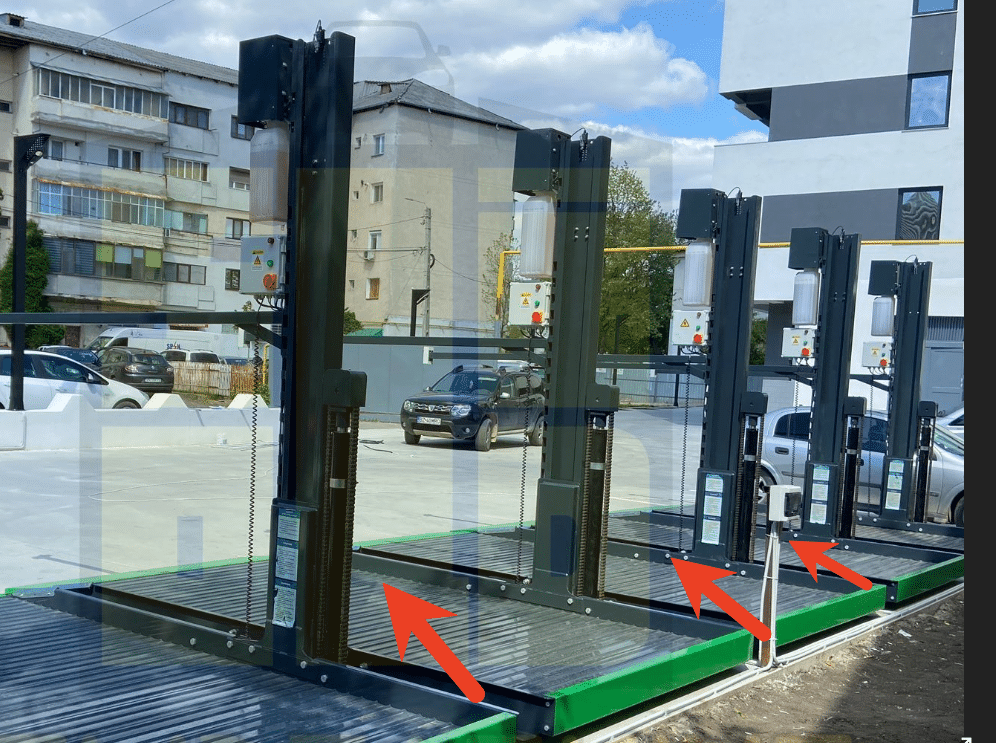
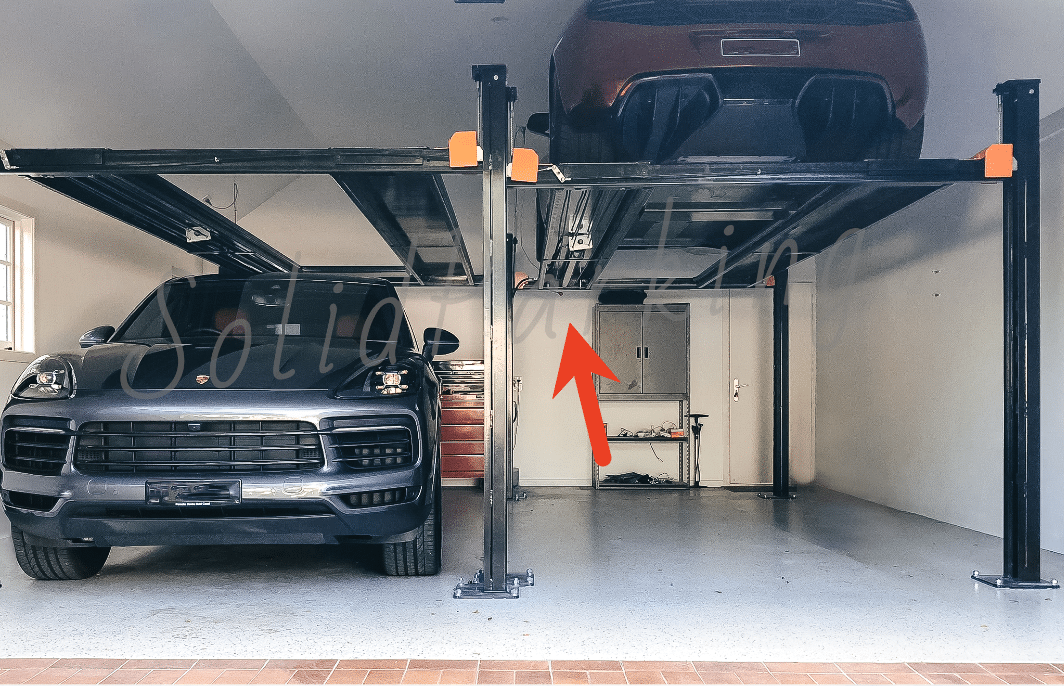
7 Powerful Truths About Parking Lifts: The Hydraulic System You Can’t Ignore

2026-01-05
Hydraulic System of parking lifts

Why Parking Lifts Depend on a Hydraulic System

If you work around parking lifts long enough, you start to notice something interesting.

Steel gets thicker.
Platforms get wider.
Load ratings increase.

But the real performance difference?
It almost always comes down to the hydraulic system.

Within the first 10% of this article, here’s the key idea:

“A parking lift is only as good as the hydraulic system that moves it.”

They allow the lifts to raise multi-ton vehicles smoothly, predictably, and safely—without relying on complex cables or high-speed mechanical drives.

How a Hydraulic System Actually Works in Parking Lifts

The Hidden Safety Logic

At its core, a hydraulic system relies on pressurized, incompressible fluid to transmit force.
In vehicle lifting applications, however, its true advantage is not raw power, but precise and controllable motion under load.

This distinction is critical.

Vehicle platforms in structured parking environments must handle several tons at a time, often within tight architectural constraints and on repetitive daily cycles. What separates a refined solution from a basic one is how motion, speed, and load are managed consistently throughout the entire lifting process.

The sequence begins at the hydraulic power unit (HPU). When activated, the motor drives a pump that converts electrical energy into pressure. That energy is stored and stabilized within hydraulic oil, which is then released through the system only when commanded.

In well-engineered lifting equipment, this process is carefully tuned so that:

  • Pressure builds progressively rather than abruptly

  • Flow rate is regulated to maintain consistent movement

  • Heat generated during operation is absorbed and dissipated through oil volume and circulation

This level of control prevents sudden movement, shock loading, and uneven stress—factors that directly influence vehicle safety, structural longevity, and overall user confidence.

In short, the platform does not simply move up and down.
Its behavior reflects how intelligently the system governing its motion has been designed.

Where the Hydraulic System Is Used?

Hydraulics are not limited to one type of parking lift.
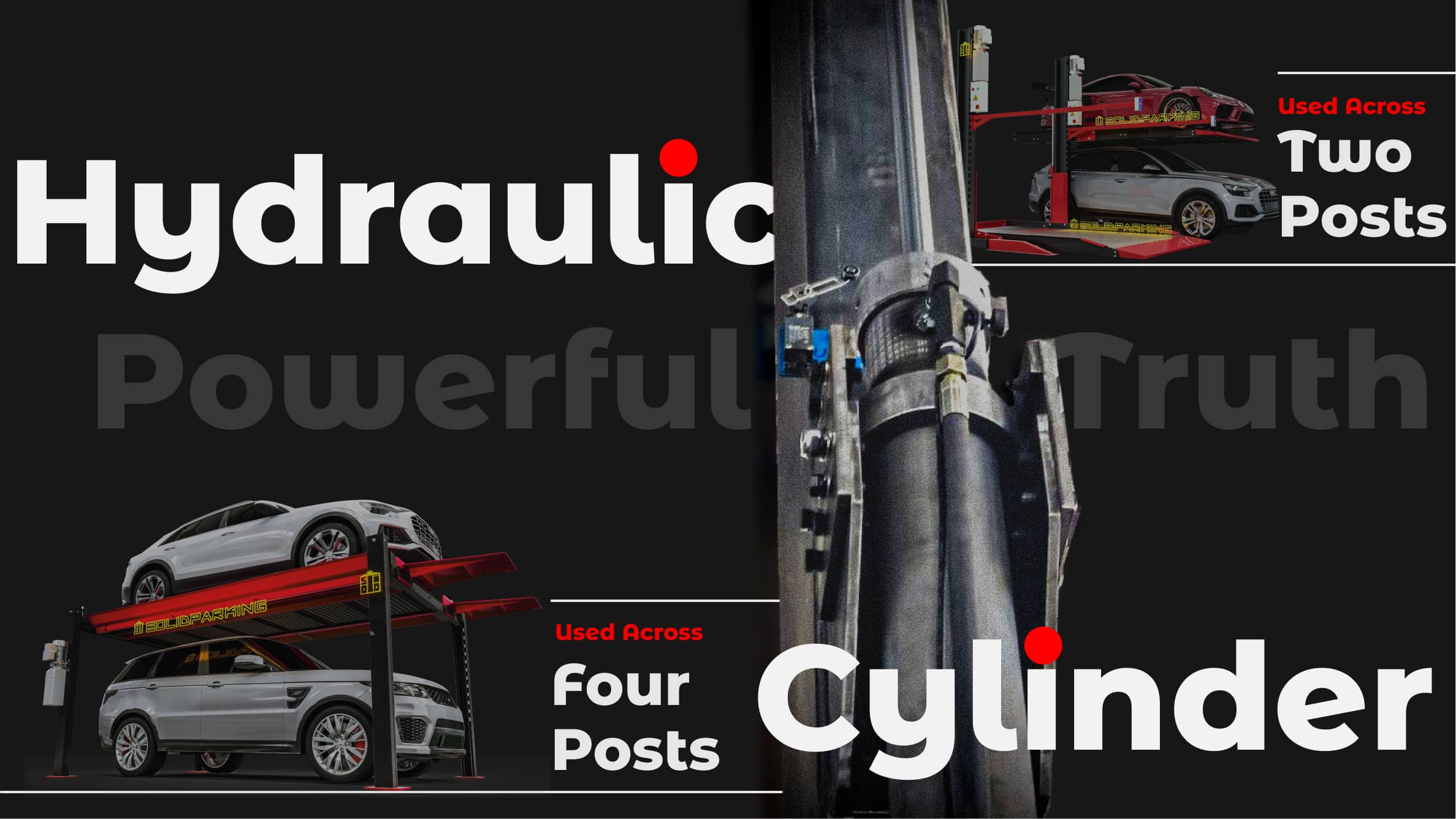
They are used across:

Two-Post Parking Lifts

  • Primary vertical lifting

  • Compact footprint

  • High cycle efficiency

Four-Post Parking Lifts

  • Synchronized lifting

  • Enhanced stability

  • Long-term storage applications

Multi-Level & Stacking Parking Lifts

  • Heavy-duty lifting

  • Thermal management

  • Commercial duty cycles

Each configuration uses the same principles, adapted for load, frequency, and spatial constraints.

Hydraulic System Used Across Two Posts Parking lifts
Hydraulic Cylinder used Across Two Posts
Hydraulic System Used Across Four Posts Parking lifts
Hydraulic Cylinder used Across Four Posts

Why Architects Should Care?

Common Myths:

From an architectural standpoint, the hydraulic system directly affects:

  • Noise and vibration transfer

  • Floor loading behavior

  • Maintenance access planning

  • Long-term operational risk

Ignoring hydraulic design during early planning is one of the most common mistakes in parking integration.

For reference, organizations like the Green Parking Council emphasize long-term system efficiency over first-cost decisions

Let’s clear up a few:

Myth 1: Hydraulic systems are outdated
→ Reality: They are still the safest solution for vertical lifting

Myth 2: More steel equals more safety
→ Reality: Motion control matters more than material thickness

Myth 3: Hydraulics are hard to maintain
→ Reality: Poorly designed systems are—good ones are predictable and serviceable

Final Takeaway: The Real Value of a Hydraulic System

Seasoned professionals understand this:

The difference between an average parking lift and a great one is rarely visible.

It lives inside the hydraulic system—in how motion is controlled, how safety is layered, and how the system performs after years of use.

For anyone designing, specifying, or approving parking lifts, hydraulics aren’t a detail.

They are the foundation.

See more details 👉:Understanding the Hydraulic System of 4-Post Car Lifts: How It Works and Why It Matters

qrcode