
7 Situations Your City Parking Garage Need Parking Lifts
If you’re planning or operating a city parking garage, this might sound familiar.
You’re out of space.
You can’t expand the footprint.
Vehicles are getting heavier every year.
Construction quotes for structured parking are shocking.
And now someone says you need “more parking.”
At this point, you’re not shopping for equipment.
You’re looking for a practical solution.
That’s where car parking lifts, especially four posts parking lifts, start making serious sense.
Let’s break down the situations where this isn’t optional — it’s necessary.
Situation #1: You Garage Must Add Spaces — But There’s Nowhere to Build
You’re developing:
A residential building
A mixed-use project
A hotel
A commercial property
Local regulations require a minimum number of parking spaces.
But:
The lot is tight.
You can’t expand outward.
Excavating underground would destroy your budget.
Adding another structural level isn’t feasible.
A traditional parking space requires approximately 25–30 m² including circulation lanes and access.
Underground structured parking can cost $25,000–$50,000 per space, depending on region and complexity.
So what’s left?
Vertical multiplication.
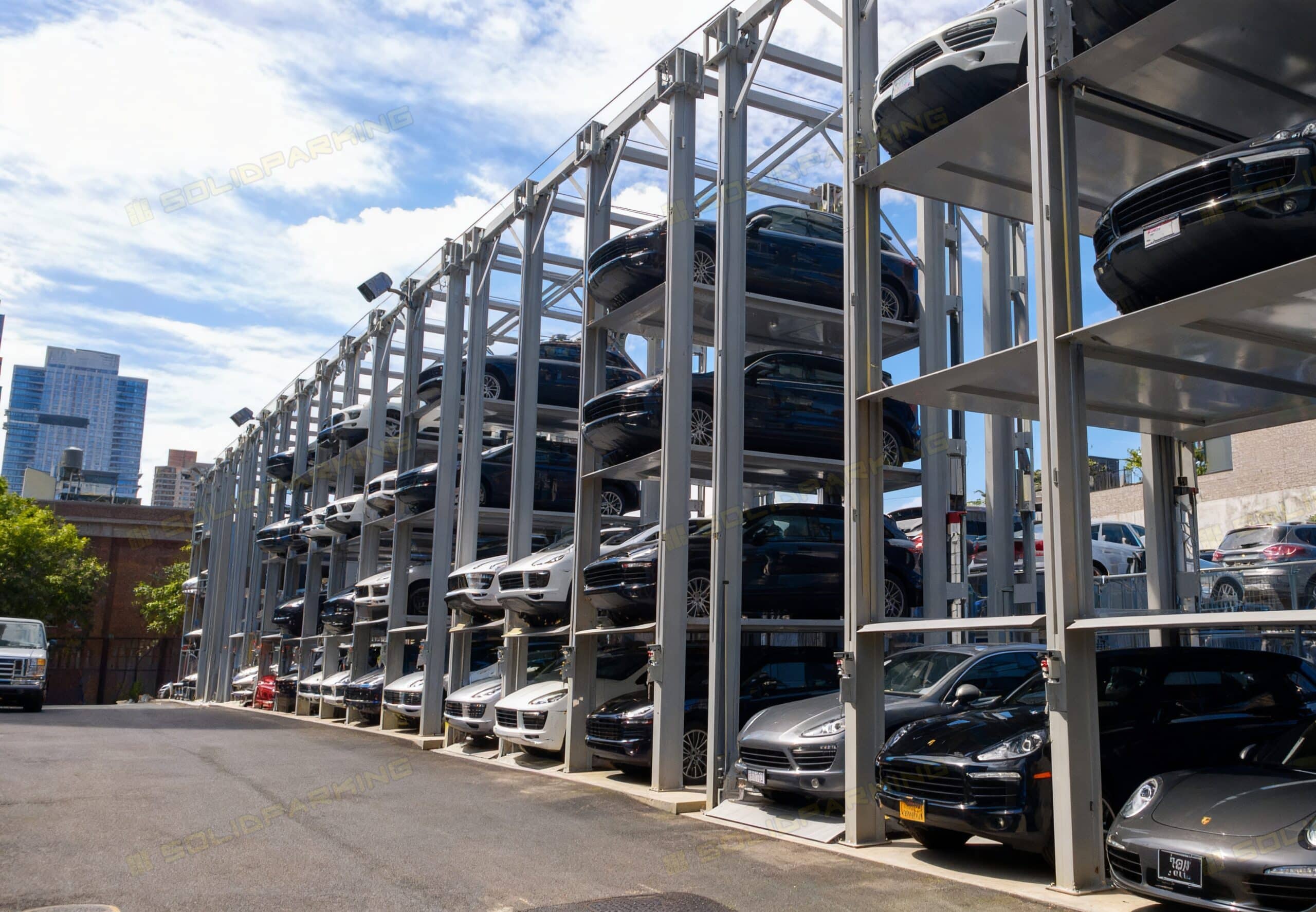
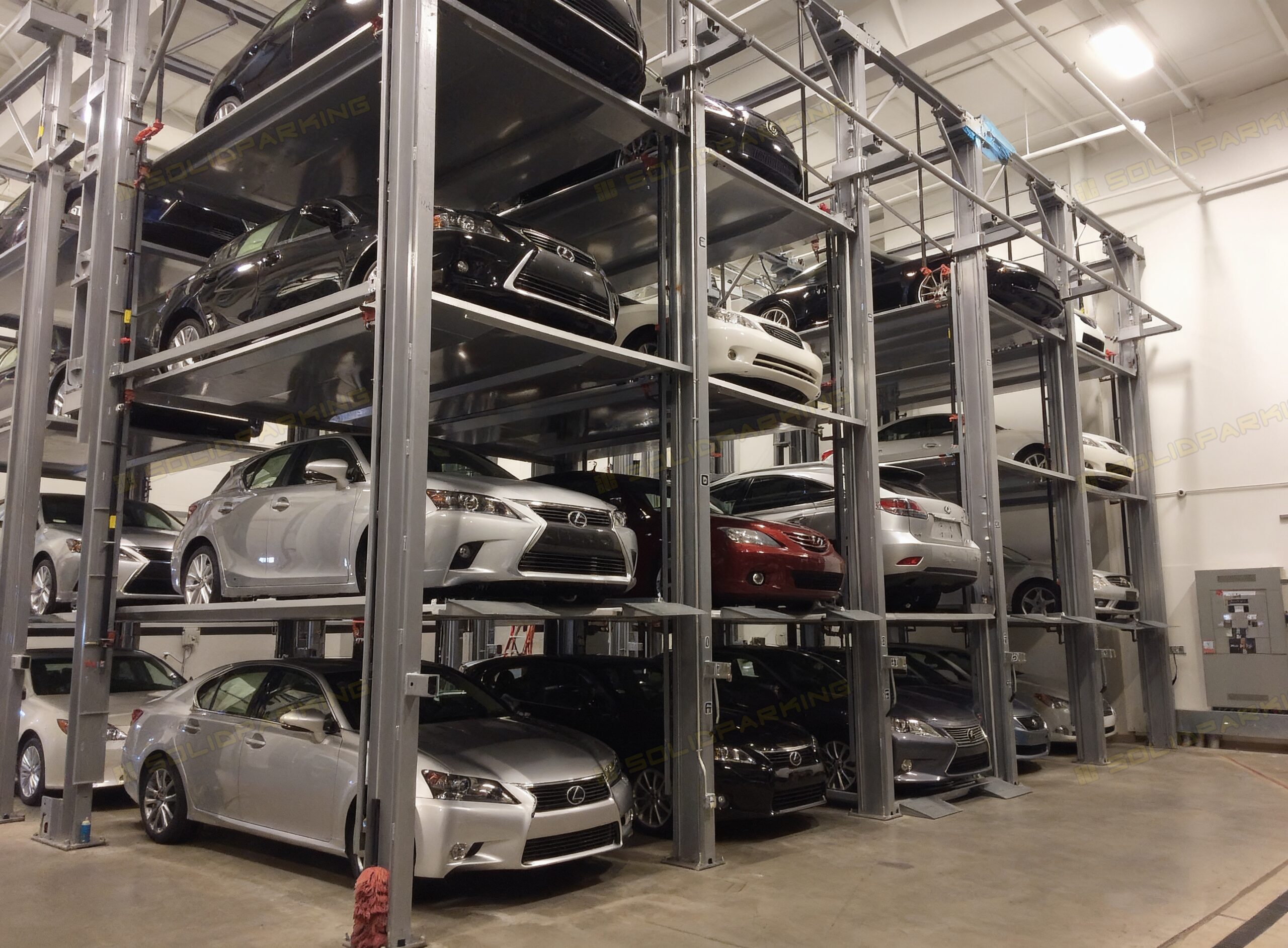
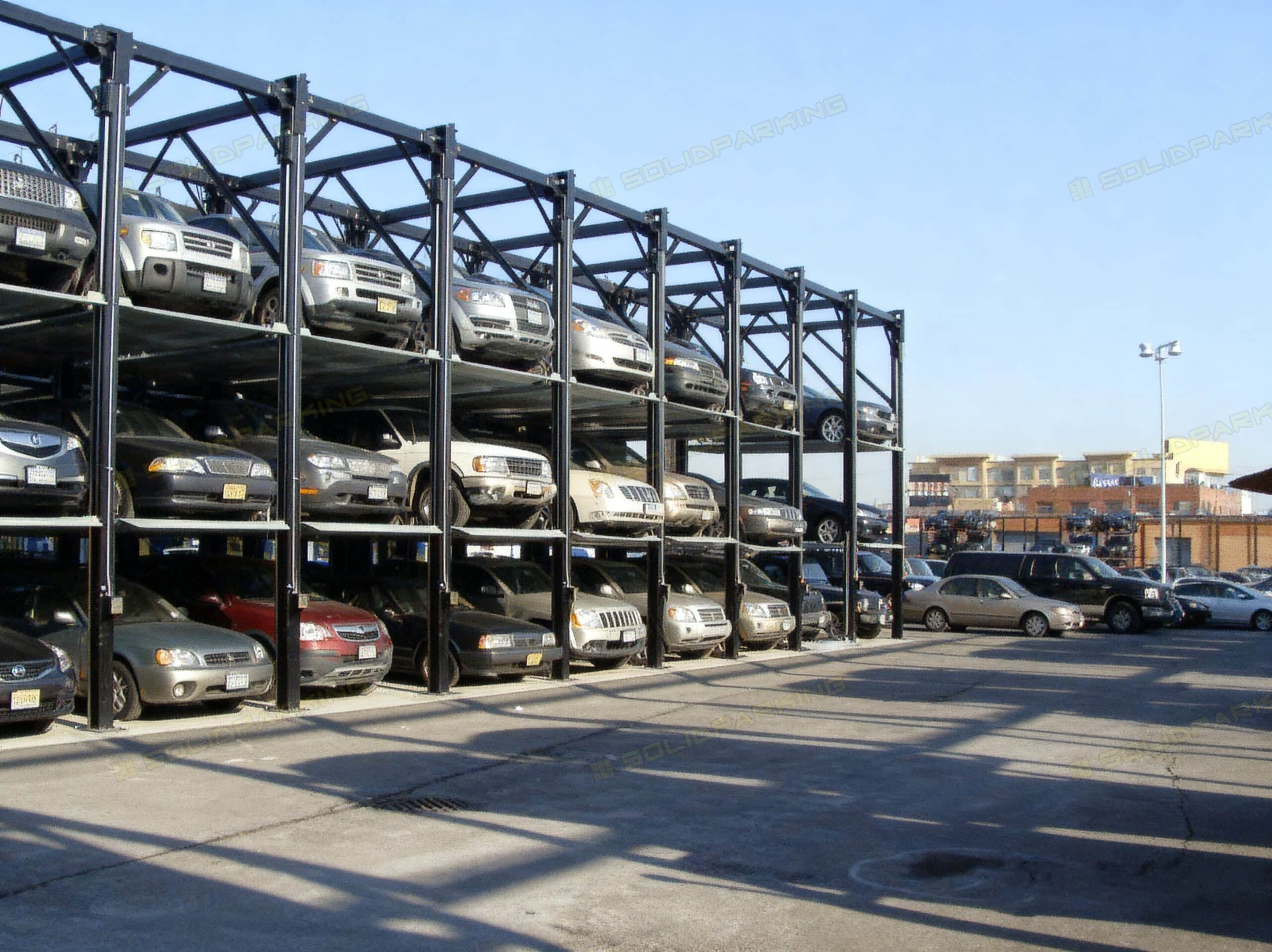
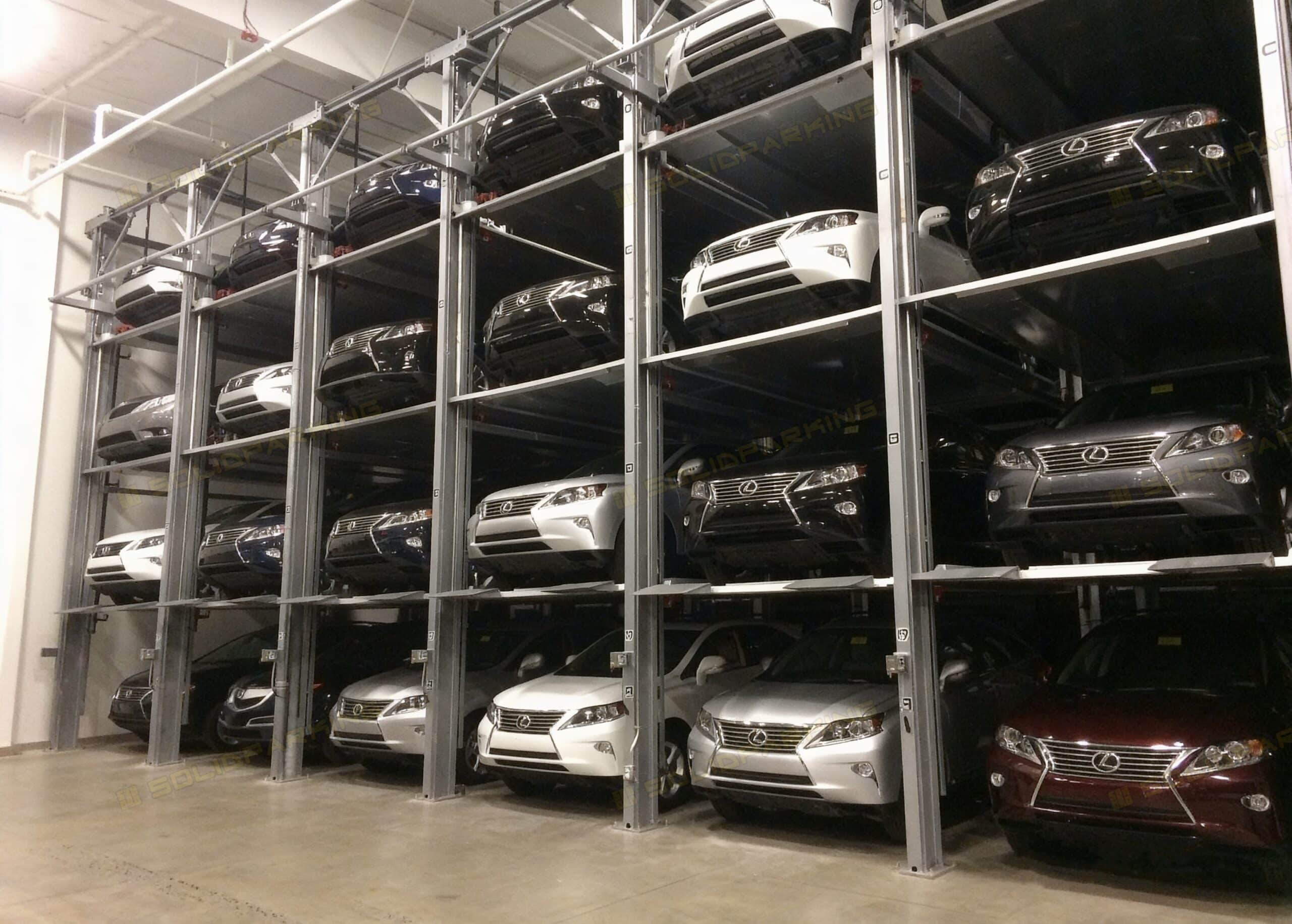
With four posts parking lifts, one footprint becomes four vertically stacked vehicles.
No ramp construction.
No major structural extension.
No new concrete deck.
If your problem is regulatory compliance without land expansion, this is a direct solution.
Situation #2: Land Cost Is the Real Enemy
Industry data from the National Parking Association (NPA) highlights the growing demand for space-efficient parking solutions in dense urban markets.
In dense urban areas, land is more expensive than steel.
Every square meter of your property must generate revenue.
Surface parking:
Consumes premium ground space
Limits retail or development potential
Reduces long-term ROI
Now imagine converting:
1 ground parking space
into
4 vertical spaces
That’s a 300–400% density increase within the same footprint.
Same ground.
Four vehicles.
When land cost is high, parking lifts aren’t a luxury — they’re a financial strategy.
Situation #3: Your Vehicles Are Too Heavy for Standard Garage Parking Lifts
Modern vehicles are no longer lightweight sedans.
Today’s averages:
SUVs: 2000–2500 kg
Electric SUVs: 2400–3000 kg
Pickup trucks & vans: 2500+ kg
Many older parking lifts are rated at 2000 kg maximum.
That means:
EV limitations
SUV restrictions
Reduced compatibility
Increased risk
Heavy-duty lifts rated up to 3000 kg eliminate those concerns.
You get:
EV readiness
Commercial fleet compatibility
Future-proof load margin
Broader tenant flexibility
If your city parking garage serves modern vehicles, heavy-duty capacity isn’t optional anymore.
Situation #4: You Need Storage Density — Not a Robotic Showpiece
Let’s be honest.
Are your vehicles:
Long-term stored?
Inventory waiting for sale?
Fleet vehicles parked overnight?
Valet-managed?
If yes, you don’t need a fully automated robotic parking tower.
You need controlled-access vertical density.
Hydraulic lifts are ideal for:
Moderate retrieval frequency
Storage-focused operations
Staff-managed parking
Semi-permanent vehicle placement
They are:
Mechanically simpler
Lower in capital cost
Easier to maintain
Industrial-grade reliable
If speed isn’t your priority but density is, this is your lane.
Situation #5: You Can’t Justify the Cost of Building a New Garage Structure
According to research published by the Urban Land Institute (ULI), structured parking is one of the highest capital expenditures in urban real estate development.
Building structured parking involves:
Excavation
Concrete decks
Ramps
Ventilation systems
Fire suppression upgrades
Long permitting timelines
That’s months — sometimes years — of work.
Hydraulic lifts are different.
They are:
Modular steel systems
Installed on prepared foundations
Electrically powered
Mechanically locked for safety
Much faster to deploy
If full construction isn’t financially realistic but additional capacity is required, vertical parking lifts become the middle-ground solution.
Situation #6: You’re Losing Revenue Because of Limited Storage
This applies to:
Dealerships
Fleet operators
Car storage businesses
Luxury collectors
Commercial garages
If you currently store 20 cars on the ground…
And you install 5 four-level parking lifts…
You can store 20 vehicles in the footprint of 5.
That’s a 4x multiplier on your most valuable asset: floor space.
For operations where storage equals revenue, density equals profit.
Situation #7: You Need Strength and Reliability — Not Complexity
Hydraulic systems are used in:
Industrial lifts
Construction machinery
Heavy-duty presses
Why?
Because they generate high lifting force with relatively simple mechanical architecture.
And critically:
Vehicles do not hang on hydraulic pressure alone.
Properly engineered lifts use:
Mechanical safety locks
Anti-fall devices
Overload protection valves
Structural steel support
Limit switches
Hydraulics lift.
Steel locks hold.
If reliability matters more than automation glamour, this is the right category.
Fire safety compliance in city parking garage construction is typically governed by NFPA standards.
So — Do You Actually Need Parking Lifts?
You probably do if:
✔ You need 4 cars in 1 footprint
✔ Your vehicles weigh 2000–3000 kg
✔ Your city parking garage cannot expand horizontally
✔ Structured parking construction is too expensive
✔ Parking is controlled-access
✔ Storage density matters more than speed
You probably don’t if:
✘ You require instant independent public retrieval
✘ Ceiling height is limited
✘ Vehicle volume is very low
The Reality
Most operators don’t start by searching for four posts parking lifts.
They search for:
More parking
Lower construction cost
Higher density
Heavy-duty support
Regulatory compliance
And when they realize they can multiply capacity without multiplying land or concrete —
That’s when parking lifts stop being equipment.
They become strategy.
If you read this and thought:
“This is exactly our city parking garage problem.”
Then yes.
You’re not looking for just any solution.
You’re looking for this one.
1. Are four posts parking lifts safe?
Yes. Properly engineered lifts use hydraulic lifting systems combined with mechanical safety locks. The hydraulic system raises the platform, but the vehicle load rests on steel locking mechanisms — not hydraulic pressure alone. Most heavy-duty systems also include overload protection valves, anti-fall devices, and limit switches to ensure operational safety in a city parking garage environment.
2. How much weight can heavy-duty parking lifts handle?
Modern lifts designed for commercial use typically support 2000–3000 kg per platform. This makes them suitable for SUVs, electric vehicles (EVs), pickup trucks, and light commercial vans.
3. Are parking lifts cheaper than building a new parking garage structure?
In many cases, yes. Traditional structured parking construction can cost between $25,000 and $50,000 per space, depending on excavation, concrete work, ventilation, and fire compliance requirements. Parking lifts significantly reduce construction scope because they are modular steel systems installed on prepared foundations rather than full structural builds.
4. When are four posts parking lifts the right solution?
Land expansion is not possible
Parking density must increase
Vehicles are heavy-duty (2000–3000 kg)
The parking area is controlled-access
Long-term storage or moderate retrieval frequency is expectedThey are less suitable for high-speed public parking requiring independent instant retrieval.
5. How much space can save?
They can increase parking density by 300–400% within the same footprint by stacking vehicles vertically. Instead of one ground-level parking space, a four-level system can accommodate four vehicles without requiring additional land.
6. Do they require major structural modifications?
Typically, no major structural expansion is required. Four posts parking lifts are modular and installed on reinforced concrete foundations. However, sufficient ceiling height and proper load-bearing slab design are necessary before installation.