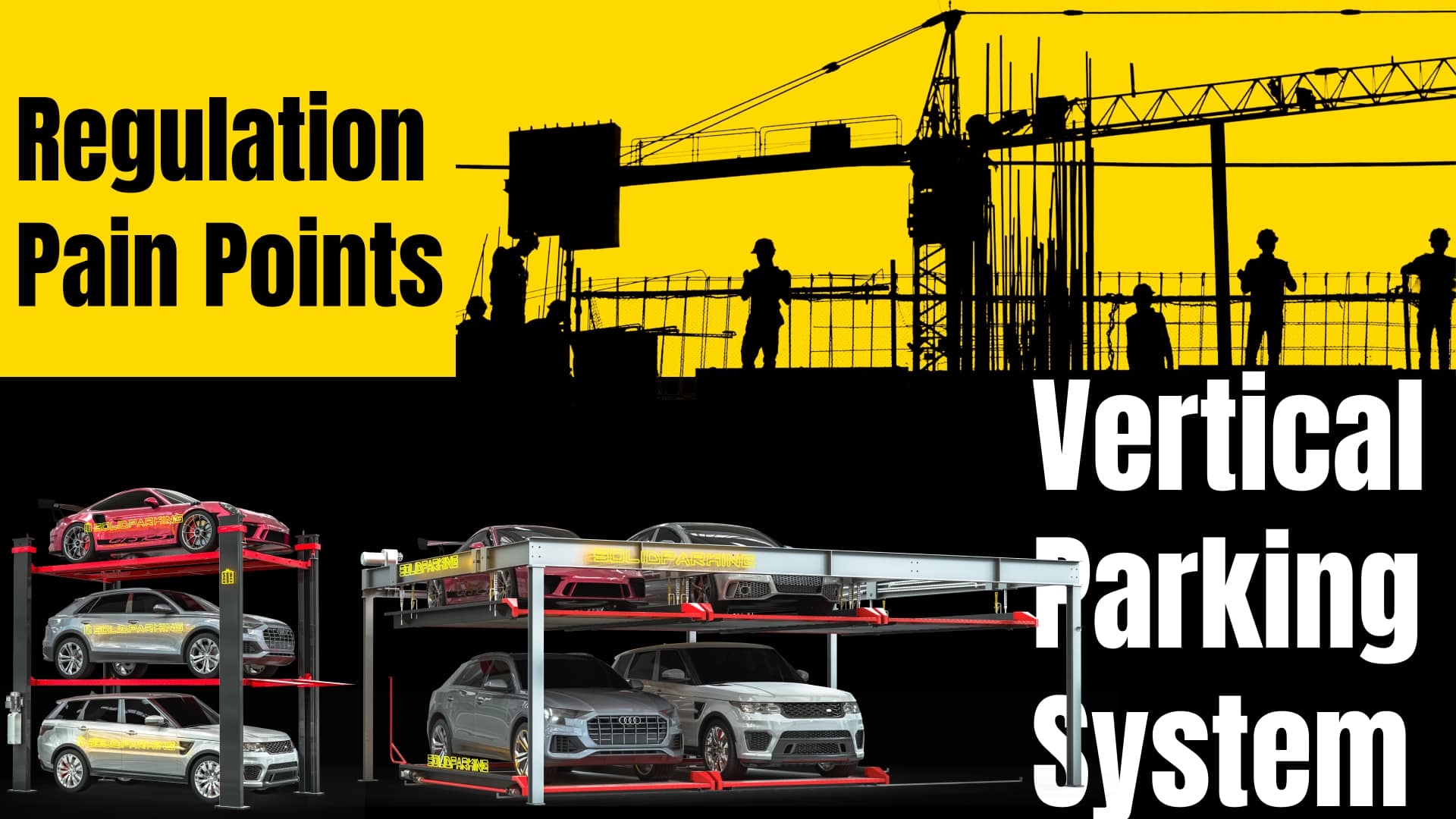
1. Why the Car Storage Vertical Parking System Is Becoming a Global Topic
Within the first stages of project planning, car storage vertical parking system strategies are increasingly discussed—not as luxury add-ons, but as risk-management tools.
Across global markets, parking is no longer just about compliance. It is about:
Protecting buildable area
Controlling construction timelines
Preserving project marketability
2. The Universal Parking Problem Developers Face
Despite regional differences, one reality is consistent:
Parking consumes space, capital, and time—yet rarely generates proportional returns.
Traditional ramp-based garages introduce:
High excavation costs
Structural complexity
Long approval and construction cycles
This is why the car storage vertical parking system has emerged as a structural alternative rather than a mechanical novelty.
3. North America: Flexibility Without Safety Nets
Regulatory Context
Many U.S. and Canadian cities are reducing or eliminating minimum parking requirements.
Market demand, however, still strongly penalizes insufficient parking.
Real Pain Point
Parking is no longer mandated—but failure to provide it hurts leasing and resale.
Vertical Parking Response
A car storage vertical parking system allows developers to:
Add parking capacity without triggering deeper excavation
Phase installation based on real occupancy demand
Maintain optional rather than fixed CAPEX
4. Europe: Efficiency Under Strict Urban Rules
Regulatory Context
Parking maximums are common in Germany, France, and the UK.
Historic preservation and low-carbon policies restrict structural intervention.
Real Pain Point
Parking must exist—but it must justify every square meter it occupies.
Vertical Parking Response
In Europe, a car storage vertical parking system is used to:
From a neutral standpoint, SolidParking systems are typically evaluated alongside similar mechanical lift solutions based on:
Load capacity
Installation speed
Structural impact
Long-term serviceability
The key takeaway is not brand superiority, but fit-for-context selection—choosing the right vertical system for the right regulatory and construction environment.
8. Final Takeaways for Architects, Developers, and Contractors
A car storage vertical parking system is no longer a niche solution—it is a planning strategy.
Regulations may reduce parking mandates, but market expectations do not.
Vertical systems succeed when treated as part of structural and phasing logic, not late-stage equipment.
“ The most successful projects do not ask “How many parking spaces are required?” They ask “How efficiently can parking exist without limiting the building?”