7 Reasons Lift-Sliding Mechanical Parking Is Quietly Winning the Future of Urban Mobility

2025-12-01
lift-slid car parking system and semi-automatic parking
Automated parking system

Table of Contents

1. Introduction

If you’re an architect, developer, or parking investor navigating today’s urban infill landscape, you’ve probably heard the term lift-sliding mechanical parking—one of the most space-efficient solutions on the global market. And as cities densify, semi-automatic parking systems are shifting from “interesting concept” to mainstream must-have infrastructure.

Here’s the truth: mechanical parking is no longer a “steel frames and motors” industry. It’s a full-stack engineering ecosystem blending automation, structural design, energy optimization, digital controls, safety certifications, and lifecycle economics.

This article breaks down the tech in a conversational, field-tested way—just as you’d hear it from a seasoned industrial sales engineer discussing a real project over coffee.

2. What Exactly Is Lift-Sliding Mechanical Parking?

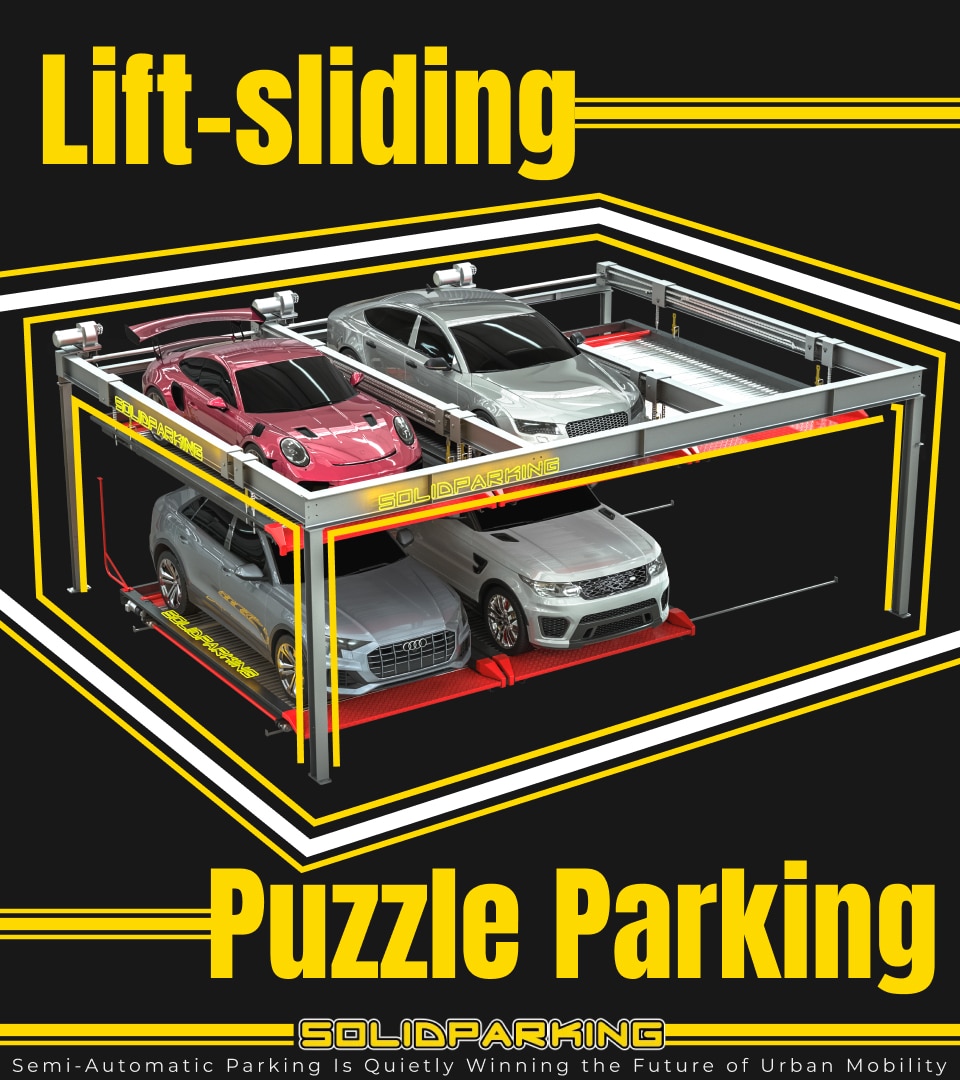
Lift-sliding mechanical parking (also called elevation-translation parking) is a structured steel system where platforms lift vertically and slide horizontally to deliver or store vehicles.

Rather than building expensive ramps or multi-level circulation, lift-and-slide platforms automatically rearrange to open a retrieval path.

In a typical 2–3 level configuration:

· Upper platforms lift up or down

· Middle platforms slide sideways

· Ground-level vehicles drive out without moving upper cars

This makes it one of the highest space-efficiency solutions outside of a fully robotic parking garage—yet far more cost-effective.

3. The Rise of Semi-Automatic Parking

A semi-automatic parking system uses smart controls and coordinated platform movements, but still allows a human driver to park onto a designated platform (instead of a robotic dolly doing it).

Semi-automatic parking hits the sweet spot:

1. Faster access than traditional stackers

2. Cheaper than fully automated robotic parking

3. More space-efficient than conventional garages

4. Lower maintenance than full-automation systems

5. Higher capacity per square meter compared to ramp garages

This combination is why developers love it:
maximum density without the capex shock of full automation.

4. Pit-Type vs Non-Pit-Type: The Real Differences

A major misconception in the industry is the idea that pit-type = hydraulic and non-pit = motor-powered.
Not true.

The choice of pit-type vs non-pit-type has nothing to do with whether the system uses electric motors or hydraulic cylinders.

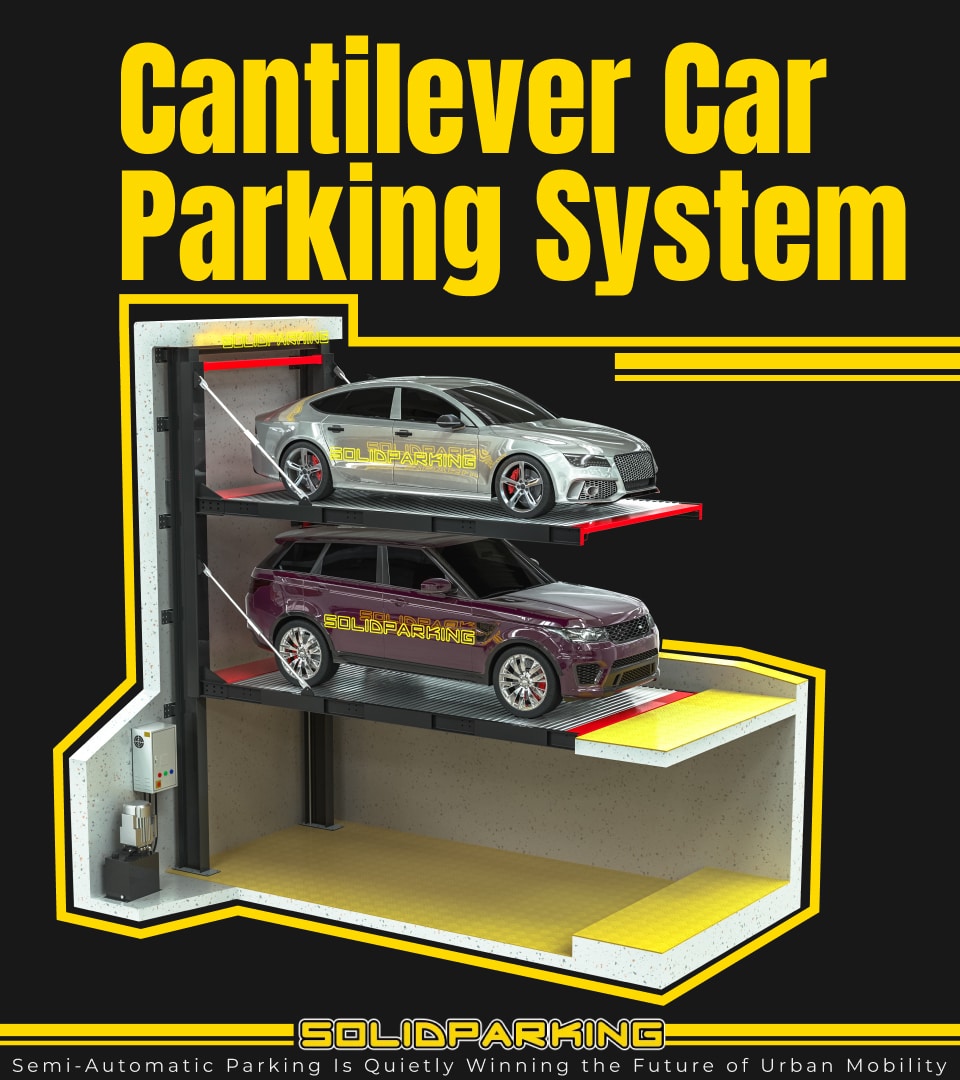
Pit-Type Lift-Sliding Mechanical Parking

– Uses a structural pit to hide the lower platform

– Lowers the visual height of the system

– Reduces building height requirement

– Usually allows the ground-level car to exit without moving other cars

– Blends seamlessly into high-end residential or commercial spaces

– Better suited for luxury developments or urban design constraints

Non-Pit Lift-Sliding Systems

– Built entirely above ground

– No excavation cost

– Faster installation

– Slightly higher visual height profile

– Often preferred for retrofits or locations with soil/water constraints

5. Electric Motor vs Hydraulic Drive: A Technical Breakdown

The drive system—how platforms physically move—is independent of pit/no-pit design. Both drive types are widely used depending on project priorities.

Electric Motor Drive

How it works:
Electric motors rotate through a gearbox → transmit torque to chain or steel wire rope → lift or slide the platforms.

Pros

  • Highly precise motion control

  • Easy to maintain

  • No hydraulic oil (cleaner environmental footprint)

  • Modular components for fast replacement

  • Generally lower long-term maintenance cost

Cons

  • Higher mechanical noise

  • Chain/wire components require lubrication

  • Slightly more vibration compared to hydraulic

Hydraulic Drive

How it works:
A pump pressurizes hydraulic oil → actuates a cylinder → moves the platform vertically.

Pros

  • Extremely smooth movement

  • Strong lifting performance with heavy vehicles

  • Lower operational noise

  • High stability under load variations

Cons

  • Sensitive to temperature (oil performance shifts)

  • Requires regular checks of oil quality, leaks, seals

  • Higher long-term maintenance complexity

  • Generally more expensive to repair if major components fail

Hydraulic = smoother
Electric motor = cleaner, simpler, more standardized

Neither is universally better—it depends on the project goals.

6. Full Technical Feature Comparison Table

Below is a consolidated technical overview combining all major factors (structure, motion, drive system, noise, cost, maintenance).

CategoryPit-Type Lift-Sliding Mechanical ParkingNon-Pit Lift-Sliding Mechanical ParkingElectric Motor DriveHydraulic Drive
Structural RequirementRequires excavation; lower visual heightNo excavation; higher profileNo specific structural requirementNo specific structural requirement
Space EfficiencyHighest; hides lower carHigh; uses full above-ground heightHighHigh
Vehicle RetrievalLower car often free-to-exitMovement required for some layoutsFast and preciseSmooth and stable
Installation SpeedLonger due to excavationFastest deploymentFast setupMedium
Noise LevelDepends on driveDepends on driveHigher mechanical noiseQuieter
MaintenanceModerateLow to moderateSimple, standardizedMore complex
CostHigher due to pit constructionLower installation costLower long-term costHigher long-term service cost
Best Use CasesHigh-end residential, architectural integrationRetrofits, industrial, flexible sitesClean, eco-friendly projectsHeavy vehicles, premium smoothness
Environmental FactorsGreat for aesthetic environmentsGreat for industrial zonesNo oil leakage riskRequires oil monitoring

7. Use Cases & Business Value for Developers

A. Real Estate Developers

A lift-sliding + semi-automatic parking system increases:

  • Sellable area efficiency

  • Parking capacity without expanding footprint

  • Property value and positioning

  • Architectural flexibility

High-end residential projects especially love pit-type systems for aesthetic integration.

B. Commercial Buildings

Retail centers, hotels, and mixed-use complexes prefer:

  • Non-pit systems for speed and lower cost

  • Electric motor drives for low maintenance

  • Multi-level configurations for high throughput

Parking becomes a performance feature, not an expense.

C. Municipal & Public Projects

Governments value:

  • High density per square meter

  • Low operational downtime

  • Environmentally friendly electric drive options

Semi-automatic parking bridges the gap between full robotics and traditional garages—perfect for districts transitioning into smart-city models.

D. Industrial & Fleet Operators

Logistics centers, auto dealerships, and corporate fleets often choose hydraulic systems for:

  • Heavier vehicle loads

  • Smoother continuous operation

  • Long lift-stroke reliability

8. Final Thoughts

Both lift-sliding mechanical parking and semi-automatic parking play a crucial role in the global shift toward compact, efficient, and sustainable parking infrastructure. The key insight? Structural design (pit vs non-pit) and engineering design (motor vs hydraulic) are independent choices—giving developers unmatched flexibility.

If you’re planning a project and want a system that:

  • Packs more cars into less space

  • Reduces construction cost

  • Improves architectural freedom

  • Delivers long-term ROI

  • Enhances user experience

Then semi-automatic lift-sliding mechanical parking is a decision that checks all boxes.

👉:For global parking guidelines, see the National Parking Association (NPA)